









What if an unremarkable Bulgarian village on the Turkish border became a safe haven for asylum seekers? What if a simple postman wanted to welcome Syrian refugees, in the hope that diversity and young people would save his little village from extinction? Documentarist Tonislav Hristov, whose films have been shown at Tribeca, Sarajevo and Hot Docs Film Festival, wanted to investigate why some Bulgarians think that Syrians cannot deal with their own problems. The Good Postman offers valuable insight into why people tend to be afraid of foreigners, exposing the roots of xenophobia.
Tonislav left his comfy house in Finland and went back to homeland Bulgaria in order to spend some time with the locals in Great Dervent. The tiny village has become heavily depopulated in the last few decades, since the demise of the communist regime.
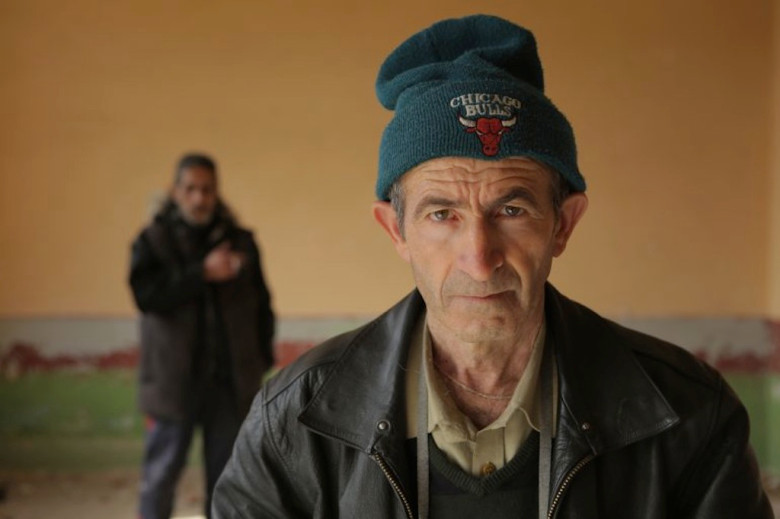
The story focuses on Ivan, a middle-aged postman, who campaigns to bring life back to the ageing village. Likewise the Greek God Hermes, who acts as a messenger between men and gods, Ivan visits the inhabitants of his village not only to bring them letters, but also to serve as the guide of their souls. He comforts an old alcoholic man, he inspires an old lady to search for a new partner, he calls the Swiss Border guards Frontex in order to tell them that no Syrian has crossed the border. He is an anonymous border patrol agent, just like those in the film Transpecos (Greg Kwedar, 2017 – click here for our review of the movie). But unlike the fictional Flores and Hobbs in the American thriller, Ivan does want immigrants to cross the border into Bulgaria.
.
.
Ivan truly believes he can make a difference. He decides to run for mayor. The other candidates are Vesa, the current much more educated mayoress, and Halachev, who is against refugees settling in his hometown.
What makes The Good Postman a compelling piece is the accurate cinematography and the look at “the other”. People who lead an uneventful existence suddenly come to life. There is even a remarkable change of mind in Halachev, after he loses the elections.
The narrative proves that a good documentarist is capable of extracting the trust from isolated people if he/she has the benefit of time. The motivation of the population in that small village dates back to World War II, when the village was split and the cemetery remained on the other side. Those ladies had to show their passport in order to cross the border and lay flowers on their relative’s graves. Hristov touches an open wound, still delivering a piece packed with the poetry of hope.
Just click here in order to find out more about Human’s Rights Refugee Programme.
The Good Postman is part of Human Rights Watch Film Festival taking place this week in London – just click here for more information about the event. The itinerant Festival will next take place in Los Angeles, Miami, New York, San DIego and Toronto. If you live in Eastern Europe, you can watch the film at HBO. Don’t forget to watch the film trailer below:
.

