








Forty-seven-year-olf Nayla Ala Khaja is the first female screenwriter, director, and producer in the history of the United Arab Emirates.
She directed her debut feature film Three in 2023. Our editor Victor Fraga watched it at the Red Sea International Film Festival, and bestowed the filthy genius five-splat rating upon the horror movie. He described it as “a terrifying exorcist drama” which “adapts Christian horror tropes into Muslim culture to exceptional results”. Read our verdict of the 2023 movie film here.
Nayla’s impressive second feature Baab – about a woman juggling debilitating tinnitus with grief – premiered at the 46th Cairo International Film Festival (review to follow very soon).
…
.
Victoria Luxford – What first brought you to the project?
Nayla Al Khaja – Baab began with an emotional impulse rather than a plot. I was interested in exploring what happens when grief does not resolve itself, when it stays in the body and mind. That curiosity pulled me toward a story that felt intimate, psychological, and rooted in silence rather than explanation.
VL – In your director’s statement, you mention grief in your own life. Was the writing ever too personal, or was it cathartic?
NAK – There were moments when it felt very close, almost uncomfortable, but I believe that discomfort is necessary. It was not always cathartic in the moment, but it became transformative over time. Writing Baab allowed me to externalise emotions that are often carried quietly, and in that sense, the process became a form of release.
VL – The primarily female cast creates a strong family dynamic. How difficult was it finding the right ensemble?
NAK – It was challenging, but also very intentional. I was not just casting performers, I was casting emotional chemistry. I needed actresses who could convey layers of history, tension, and intimacy without dialogue. Once the right ensemble came together, the family dynamic felt organic and deeply believable.
VL – How did you approach portraying tinnitus, which feels like a character in itself?
NAK – I treated tinnitus as an invisible presence that shapes the protagonist’s reality. Sound design became a narrative tool rather than a technical layer. We worked carefully with frequency, rhythm, and silence so the audience could experience what Wahida experiences, not just observe it.
VL – How did iconic Indian music composer A.R. Rahman become involved with the project?
NAK – I shared the script with him, and he connected to its emotional core very quickly. He understood that Baab was not about spectacle, but about interior worlds. That shared understanding made the collaboration possible.
VL – What was it like collaborating with him? Was there intimidation?
NAK – Of course there is respect when working with someone of his stature, but there was never intimidation. He approached the film with humility and curiosity. The collaboration felt deeply human and intuitive, rooted in emotion rather than ego.
VL – Does the responsibility of being the first female film director in the UAE ever feel overwhelming?
NAK – At times, yes. But I try not to carry it as pressure. I see it as purpose. If my work opens space for other women to tell their stories more freely, then the weight becomes meaningful rather than overwhelming.
VL – The film questions societal pressure on women. Has there been any backlash?
NAK – There have been conversations, which I welcome. Baab does not aim to provoke for the sake of provocation, but it does invite reflection. Any discomfort usually signals that something important is being touched.
VL – The film is set in a rural part of the UAE. What do you hope international audiences take from this?
NAK – I hope it expands their perception of the UAE beyond modern skylines. The mountains of Ras Al Khaimah carry silence, spirituality, and depth. They reveal a different rhythm of life, one that is deeply connected to memory and inner landscapes.
VL – Finally, do you have any upcoming projects you can share?
NAK – Right now, my focus is on Baab’s international journey. I am also developing new projects that continue to explore psychological and genre driven storytelling, but it is still early. I like to let ideas mature quietly before speaking about them.
…
.
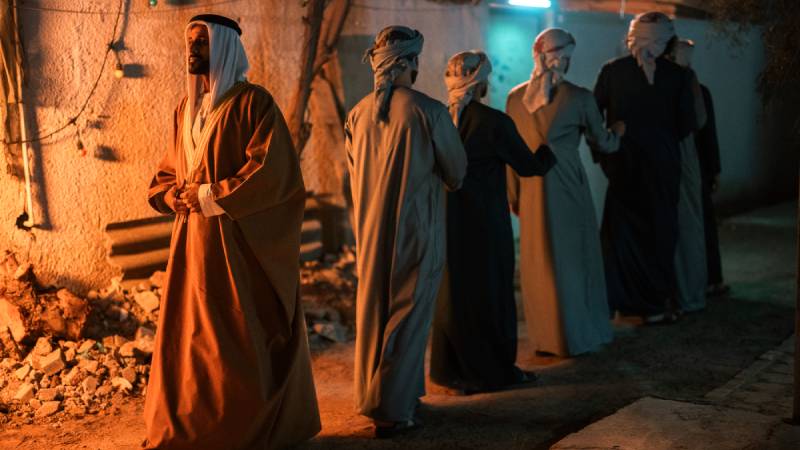
Nayla is pictured at the top of this interview. The other image is a still from Baab.


