








Sabrina S. Sutherland is known as David Lynch’s longtime producer and friend. Their collaboration dates back to 1989, during the production of the second season of Twin Peaks. Sutherland continued as a production co-ordinator on Lynch’s next two series, On the Air (1992) and Hotel Room (1993), before running the set of the neo-noir horror Lost Highway (1997). From Inland Empire (2006) onward, she produced most of Lynch’s film works, the majority of which comprised short films, music videos or episodic shorts. She also produced Jon Nguyen’s documentary, Lynch: The Art Life (2016).
This year would have marked the 80th birthday of the multidisciplinary artist, who passed away in January 2025. Regarded for his surreal and dreamlike, sometimes cryptic films, Lynch moulded an identity as one of the United States’s true auteurs. In celebration of this singular artist, the BFI have curated a new major retrospective titled David Lynch: The Dreamer, that will screen his feature films as well as a selection of his short films, with events and a Twin Peaks-inspired immersive installation. The event runs from January 1st to February 1st.
…
.
Paul Risker – Was David Lynch ahead of his time?
Sabrina Sutherland – David has been ahead of his time from the beginning because a lot of his films were never well received. Fire Walk With Me [1992], Mulholland Drive [2001], or Lost Highway. I mean, nothing was well received. I’m waiting for Inland Empire to really make the impact that it deserves, because that’s one of his best films.
He never repeated himself. He had certain themes but with his ideas, he never liked to be stagnant. He was always looking ahead, and it’s funny, because the last project we were working on before he unfortunately passed away is one of the best things I’ve read – I just love it. He asked me, “Do you think this is too dull?” And I said, “No, no, it’s not.” But he didn’t want to be lazy about anything. He always tried to go beyond, and I love that about him.
PR – Is there a case to be made that Lynch was more grounded than the popular image of him as someone cryptic and mysterious, with a dark imagination suggests?
SS – Well, look at The Straight Story [1999], right? If you tell anyone it’s a Disney film, they’ll be like, “Wait, David Lynch never directed a Disney film“. But here it is, and I think it’s one of his most emotional films. I see so much of David in that film, whereas a lot of people don’t understand that that’s David Lynch, but it is.
He was a deep, kind and sympathetic person, and even though darkness comes through in his films, he’s mainly showing a reflection of what’s out there in the world. But he also shows the light. David was also very funny. So, besides the humour, the one theme that runs through everything he has made is humanity. He loved the light, and he loved the goodness of people.
When you have people try to imitate David, it never works, because they try to make something strange for strange’s sake. David didn’t go out to plan something strange or weird – that was just how his ideas flowed. And unless it’s organic like that, then people can’t imitate it.
PR – Some of Lynch’s films, like Lost Highway and Mulholland Drive capture both the logic and confusion of a dream, or nightmare. They seem to make sense, and then you’re lost down the rabbit hole. Is this what makes Lynch a master at creating dreamscapes?
SS – I don’t know that I necessarily agree with that, only because, for David, his vision of whatever he’s doing is his vision, and he left it up to the viewer to come up with their own answer for what it is. You’re decoding it as these kinds of dreams and this dream logic, but I don’t know that was his intent. I think he would always say, “What do you think?” And “That’s the answer.” So, perhaps you’re right. Everything is interpreted in the way you see it and that’s really the way it should be. I don’t think it should be confined to one specific thing.
For me, I look at David’s films, and I can always see this thread. I’ll think, “Oh, this totally makes sense to me”. Why? I don’t know, but to me, it’s very easily understood. I don’t know whether that’s his intent, because he would never talk, except for one time when I spoke to him about Lost Highway. I went up to him and I said, “This is what I think this is about”, and he said, “yeah”, just like that. And then later, during Covid, we were remastering Lost Highway and I said, “oh, remember you told me that my idea about what you meant was right”, and he said, “no, I never said that”. So, I said, “yeah, you did”, and he says, “no, I never said that”. We fought about that one.
PR – I don’t necessarily think I’m right, and I share your feelings about the freedom for the audience to shape a film. After all, regardless of what the director intends or how anyone else responds, the only thing that matters is your response.
SS – I agree with that 100%. And for me, a good film is something that I’m involved in, and after the film’s over, I’ll keep thinking about it. It’s something I can watch again in a week or a month, in a year or five years, and it still has a resonance or something new hits me, where I’ll have to be a critical thinker and act. And David did that to me in spades.
PR – Lynch had a way of using the audiovisual as a way to grab your attention. I’m thinking particularly about the opening jitterbug dance sequence that cuts to the car winding through the Hollywood Hills in Mulholland Drive. Transitioning from that energetic dance music to the slow and haunting score is mesmerising. This is one way Lynch could burrow inside our minds, right?
SS – For sure, and I know just from watching David work that the audio and picture are 50-50. So, you have certain soundscapes and other things that hit you that you don’t know are even there. Or there are even visuals that you see, and then it’s like, “what was that?”, you’re not quite sure what you’ve seen, and those are the things that I love.
I’ll watch other films, and I might think “Oh, that sounds really good”, but then a day later I’m not even thinking about that film anymore. It might have made an impression when I first saw it, but if I don’t think about it later and have an impression or a thought, then that’s not a good film.
PR – The Elephant Man [1980] and The Straight Story are two important films in Lynch’s filmography because they protect him from being accused of simply creating films that are difficult to understand. And yet, he’s still pigeonholed as a director of confusing puzzle-like cinema.
SS – Oh, I think those are important, and I think Dune [1984] is important too, even though it didn’t end up being what David wanted it to be editorially. Now, remember [Denis Villeneuve’s Dune and Dune Part 2, 2021 and 2024 respectively] were two feature films telling the same story that David tried to do in one film. And David was, of course, cut off at the knees. But if you look at the acting, the costumes, the design and the weight of imagination in its direction, then Dune is an amazing film. And that’s a linear story, right? And with Blue Velvet [1986], you have a mystery that is solved. So, I think you’re right that audiences will put people in a little box and all of those things that don’t fit in that box, they don’t care about as long as they can label them. They just don’t think about anything else at all and it’s too bad.
PR – What insights into his personality did you gleam from your experiences of working with him?
SS – First and foremost, when I think of David, I think of his humour. He made me laugh every day I was working with him – till I was crying. So, for me, he was a very generous and funny guy, which is the opposite way you might see him from his films. And I also saw him as being very down-to-earth and inclusive. He looked everybody in the eye, and he made you feel valued. Anybody could say anything to David, and anybody would do anything for him. That’s why there were crew on this last Twin Peaks [2017] who worked on the first Twin Peaks, because these people wanted to work with him.
There’s only one director I’ve ever worked with that made the set so inviting and warm, that you were like, “hey, let’s do this together” kind of thing. It was a collaboration between everybody. That was David’s set and that was so rare because you’d go to any other set afterwards and it was a rude awakening.
So, that’s how I saw David on set, and he was nothing like some mysterious person. He was funny but he was also serious. He knew what he wanted, and he never took no for an answer. He’d always figure out a way of doing what he wanted because he was driven by the idea, and he’d stay true to it. And that’s how he was with his art, whether it was his painting, films or music. He had to have an idea in order to move forward, and he would even sit and think for hours to come up with one.
PR – Do you think the audience is sometimes more responsible for turning Lynch into a man of mystery than the man himself?
SS – Actually David wasn’t a man of mystery to me. He wasn’t secretive; he was very vocal about his beliefs, his thoughts and what he wanted. He didn’t explain the film or what it meant or why he would want something. But he could explain exactly what he wanted without giving a reason for it. And David wasn’t doing strange for strange’s sake. He wasn’t doing a mystery for mystery’s sake. He felt this was what he wanted to do, and however you interpret it, is right, because the audience should be an active participant in his films.
And everybody perceives things differently; nobody sees the same thing, right? People talk about a film, and they have theories. I sometimes think people need to feel that others agree with them. You don’t want to be that person that’s thinking, “oh, no, that’s not what I got at all. But everybody else is saying this, and they must be right”. David tries to break you out of that mentality of being part of the group to get you to think for yourself.
…
.
David Lynch: The Dreamer, a new major retrospective of the filmmaker runs at the BFI Southbank and BFI IMAX from January 1st to February 1st.
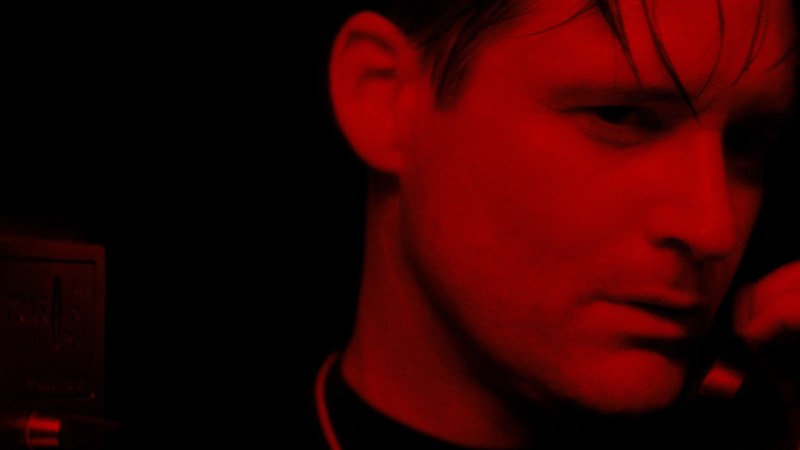
Sabrina Sutherland is pictured at the top of this article, photograph by Patrick Ecclesine. The other image is a still from Lost Highway.


