








This is an in-depth meditation into Sokol’s single-minded, if tempestuous, pursuit of success and recognition as a figurative painter. As Glob documents the artist’s life over an unusually extended period, she begins to parallel her own life with Sokols, slowly interweaving aspects of her own life into the process.
We first encounter Sokol at the Paris Lavoir Moderne Parisiene, a run-down theatre space leased out to her father, which doubles up as an artist colony providing studio and living space. It is where she was born and spent her early years, before moving to Denmark after her parent’s divorce. Sokol is in her early 20s studying at the prestigious École des Beaux-Arts, wholly devoted to painting. A love that was instigated as a sick child in hospital, spurred on by the nuns to paint religious figures. It’s a pull that became even stronger as a grown-up, becoming the sole driving force for her existence. As an adult Sokol is openly averse to having children, thinking of it as a career distraction; a point she keeps having to reiterate to others throughout the documentary, as a woman aging.
We get glimpses of her candour and emotional generosity, specifically in her relationships, such as the one with Oksana, a refugee, a fellow artist and activist (the co-founder of Ukrainian women’s right group Femen). Oksana is a kindred spirit but unfolding events reveal a troubled soul, where Sokol maintains an unwaverinh loyalty to her. Inevitably a friendship blossoms with the person behind the camera, with the documentation becoming increasingly less one-sided as Sokol becomes more engaged with Glob, inquisitive of her personal (having a baby through a life-threatening pregnancy) as well as professional progression (Glob directed and released two other documentaries over the course of filming).
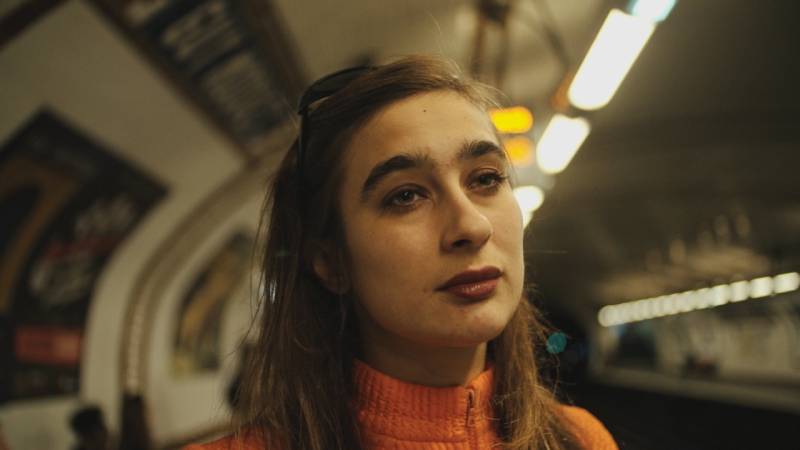
You fully comprehend Glob’s keen interest in Sokol, originally a subject matter for a film school project ends up spanning into thirteen years of footage. Sokol is an alluring figure, filling the screen with her natural beauty and bohemian free spiritedness. For all her exhibitionism, Sokol doesn’t come across as vain, but more instinctual and open, with a degree of humility, an inevitable by-product of life struggle but also as an artist continually subjugating themselves to critique and rejection.
The concepts and format here aren’t particularly ground-breaking. The struggle of a painter is historically familiar territory, and not just limited to painters but across the board for all those striving to make a living out of their creative endeavours, including filmmaking. What is enthralling is watching it happen in real time across an extensive time frame traversing through major cities Paris, New York to LA and back, through the perspective of this fascinating figure. Observing, often uncomfortably, how this strive for success is always at the behest of indomitable capitalistic (predominantly patriarchal) forces of the art world and how they inexorably affect her artistic output.
As she attempts to streamline her portraits, away from the more elaborate and brimming earlier work, perhaps to increase their marketability, she is harangued by gallerists and academics that her ‘full’ personality isn’t reflected in her new work. Dismissing in minutes the dedicated labour, time, and cost to produce these sizable canvasses. When Sokol reaches a moment of success in her thirties, it appears tinged with heavy contemplation, the emotional toil of experience has left permanent marks.
Ultimately what these art-world gatekeepers initially don’t get but signal to, is the grander point that Sokol’s ‘full’ personality is also part of the artwork. The art is not separate from the artist, it’s one whole package. In this context, the documentary acts as an art installation: vulnerable and emotionally all-encompassing persona traverses through life creating intricate, dramatic life-size portraits.
Apolonia Apolonia premieres this year’s BFI London Film Festival.

