









Ever since its release in 1950, Akira Kurosawa’s Rashomon enraptured the world with its stunning cinematography and groundbreaking plot devices. It was the first Japanese film to win the Golden Lion award at the Venice Film Festival (1951), and it made Japanese cinema popular in the west. Even for today’s agitated and restless audience, it remains a spellbinding watch.
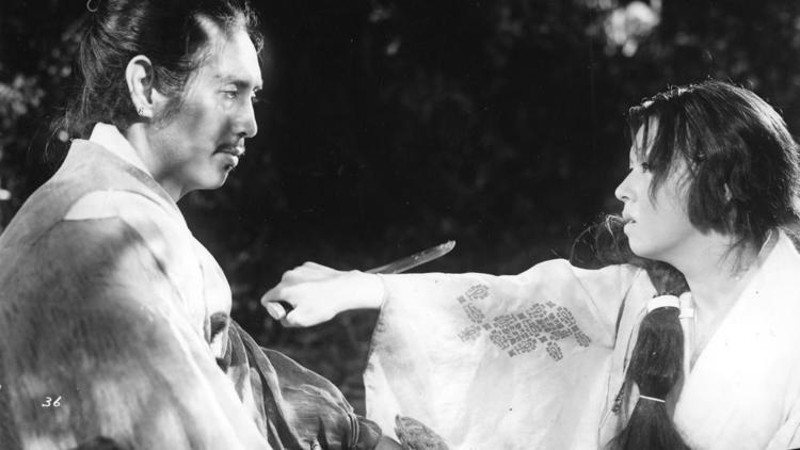
Cinematographer Kazuo Miyagawa’s long shots of the forest drew inspiration from the silent cinema of the 1920s. Images of sunlight breaking through leaves, showering the dark woods with strings of light, are particularly striking. The still beauty of the natural surroundings contrasts sharply with the dramatic incident in the story. A noblewoman (Machiko Kyō) was violated by a notorious bandit (Toshiro Mifune) and her samurai husband (Masayuki Mori) was murdered and left to rot in the woods. The answer to who committed these atrocities is fogged by the conflicting accounts of the four witnesses.
Through an ingenious use of flashbacks, Kurosawa introduced a new type of narrative uncertainty to filmic language. The storytelling technique was so revolutionary that the film title became synonymous with a narrative told from various unreliable viewpoints, known as the Rashomon effect. The camera investigates each witness like a magnifying glass. Miyagawa’s close-ups are scrutinising, probing for signs of dishonesty. When the noblewoman collapses in tears, the shots glare at her – deliberating whether she is genuine or playing the victim role. The audience waits patiently, as would a policeman in an interrogation room, for cracks to show in her and the other witnesses’ retelling of the incident.
The director pulls the audience into the action by admitting us into the role of detective. In court, the witnesses address the camera directly when answering the questions, but we never hear nor see the questioner. Why? Because we are the real investigators; and we are also invited to form a judgment on who is guilty and who is innocent. Rather than passively observing the movie – which creates a distance between the audience and the film – we participate in its development.
Caught in the narrators’ web of deceits, the pressing question becomes who, if anyone, is telling the truth. This carries the weight of a moral inquiry into the nature of men – whether or not our actions are driven by selfishness and deceit.
In the end, everyone involved in the incident is guilty of acting out of self-interest. We learn this from the woodcutter (Takashi Shimura), who was a bystander. He is aware that the other witnesses’ accounts of what happened are false, and is deeply disturbed by what this says about human nature. “All men are selfish and dishonest. They all have excuses. The bandit, the husband”, he exclaims in anger. Beneath the surface, the bandit and the samurai are cowards who fight, not to lay their claim on the woman, but in a pathetic effort to preserve their pride. Likewise, the noblewoman would rather have her husband killed than her precious honour soiled.
Kurosawa’s riveting psychological thriller takes its name from the Rajomon Gate, which led out to the lawless wilderness beyond Kyoto. This is a fitting location for the movie – where bandits roam free, men are killed daily and poverty is rife.
Rashomon is in cinemas on Friday, January 6th, as part of the Akira Kurosawa retrospective at the BFI.


