







Ftom September 9th to 15th at the São Jorge Cinema of Lisboa, horror fans and film professionals will meet up for a showcase of more than genre movies from every corner of the planet. MOTELX is now on its 19th edition.
This year, Portuguese horror is at the very heart of the event. The highlights include Jorge Cramez’s Shadows, Nuno Bernardo’s The Pianist, as well as Crendices – Quando o Medo Vem das Crenças, signed by the Madeira colective 4Litro. Women too will be at the spotlight. The brand new Noémia Delgado Award for Remarkable Women in Horror will recognise some of the most innovative, and thought-provoking work by fast-rising female artists. Guest of Honour Gale Anne Hurd is the producer behind classics such as The Terminator (James Cameron, 1984) and The Walking Dead (Roberto Kirkman/Frank Darabont, 2010).
The event hopes to attract guests from various countries. DMovies will be present at the coalface with horror expert Anton Bitel – expect some terrifyingly dirty reviews to come!
We took the opportunity to ask a few questions to João Monteiro, one of the festival directors, and find out what is it that makes the event truly special.
You can find out more and book tickets by clicking here.
…
.
DMovies – MotelX is now on its 19th edition. Please share with us some of the biggest achievements/ milestones in the event’s two-decade history?
João Monteiro – When we started in 2007, we established three guiding principles and three goals for the festival: to bring in great masters of the genre, to screen films from all continents, and to stimulate the production of Portuguese horror cinema.
Twenty years later, we can proudly say that we have achieved these goals – especially the last one, which seemed the most challenging. It’s rewarding to look back and know that many of these great masters, most of whom are no longer with us, were able to attend what used to be just a small horror event on the edge of Europe.
DM – You will showcase 130 horror films this year. Please tell us about your programming and selection criteria.
JM – As I mentioned before, we try to keep our selection geographically diverse, so throughout the year we seek out more remote films, such as African or Middle Eastern horror cinema. Then we look for strong titles, which has become more difficult nowadays because once a film has a good screening at a major festival, it often follows a schedule that prevents it from appearing in other festivals.
Another important factor is thematic variety – trying to cover all subgenres and the most diverse perspectives within the genre. In the parallel sections and retrospectives, we always aim to include programs that have some relevance to current events.
DM – Where do the majority of the films come from?
JM – They come from various sources, including film festivals and markets like Cannes and Berlin, meetings with sales companies from all over the world, research into the lineups of specialised festivals, and submissions via FilmFreeway.
DM – You have a focus on women directors this year. Please tell us more about that. Do you know how many of the 130 films were made by women?
JM – One of the major developments in horror during the 21st century has been the emergence of female horror filmmakers – something that was virtually non-existent until the end of the 20th century – and this has had an impact on our programming.
For a long time, we wanted to create an award to highlight female perspectives and pay tribute to forgotten pioneers. That’s why the award is named after Noémia Delgado, a unique voice in Portuguese cinema. Another reason we decided to launch this award is because of its first recipient, Gale Anne Hurd — someone who has built an exceptional career in the genre and in an industry still overwhelmingly dominated by men.
As for the films directed by women in the main program, I’d say we’re close to one third. It’s still not enough but considering that just ten years ago it was hard to find even one, I’d say we’re making strong progress toward future balance.
DM – Portugal is not a country our audiences immediately associate with horror. Where should horror fans start in order to become acquainted with Portuguese horror?
JM – The (secret) history of Portuguese horror is something we’ve been working on with great dedication. Back in 2007, we had no idea whether Portuguese horror films even existed, so we had to create a special section – called The Lost Room – where we explore that past and try to uncover the roots of a national genre cinema.
That’s why, three years ago, we released a book that summarises this amateur research project, titled “The Lost Room of MOTELX – The Films of the Portuguese Horror (1911-2006)”, which includes a list of horror films made before the festival was born. The good news – and to answer your question – is that the English version will be released very soon.
DM – Are there any anecdotes you could share? Something interesting, peculiar or very unexpected that happened at the festival?
JM – Obviously, after 20 years, there are plenty of anecdotes, but I can’t recall one in particular right now. I do remember that in 2007, Cinema São Jorge didn’t have functioning air conditioning, and September is still very hot in Lisbon – those were true cinema-and-sauna sessions.
There are also many stories involving guests. Some of the most memorable appearances were by José Mojica Marins, a.k.a. Coffin Joe, and Alejandro Jodorowsky, who nearly caused a riot at the cinema. Who knows, maybe one day we’ll write the festival’s memoirs. These days, with the boom in mass tourism in Lisbon, it’s not unusual for a Hollywood celebrity on holiday in Portugal to show up to catch a film.
DM – Any interesting facts and figures (audience numbers, budget of horror films, percentage of films that reach streaming, anything really)
JM – One of the most interesting statistics about MOTELX has to do with the gender of our audience – we actually have a 50/50 balance between men and women. This fact has often been noted by international filmmakers, who are surprised by it.
Genre film festivals are typically male-dominated territory, so this is something that makes us very happy, even if we don’t have a clear explanation for it.
…
.
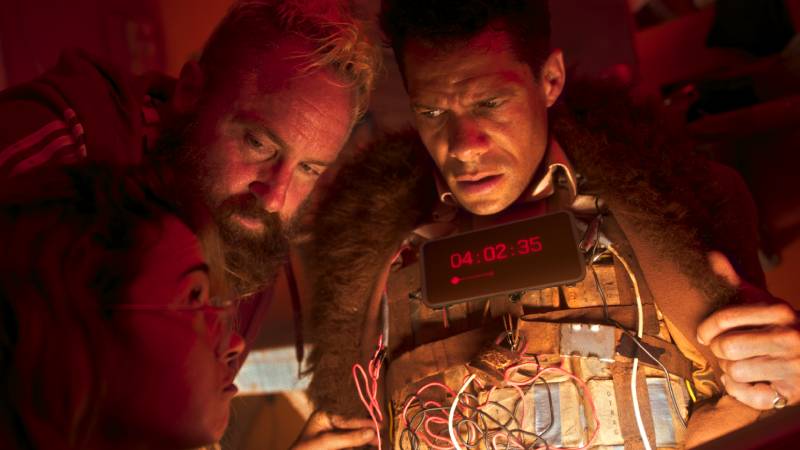
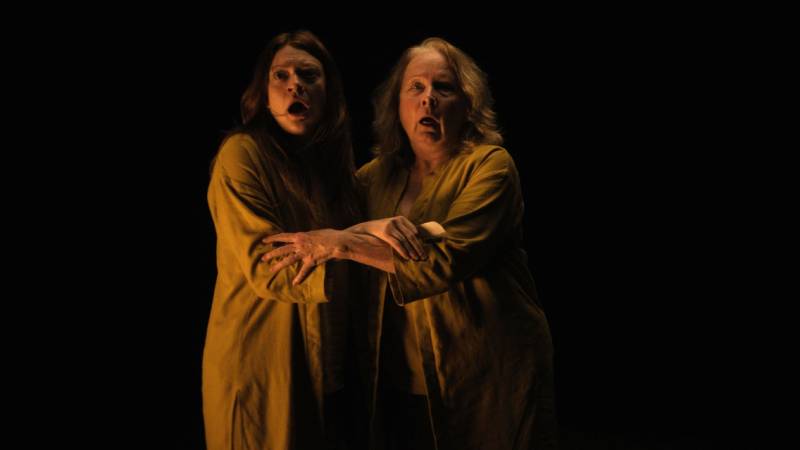
A theatrical screening of MOTELX is pictured at the top, snapped by Bruno Simao. The other image is a still from laste year’s hit Zer0, by Jean Luc Herbulot, and The Surrender, by Julia Max.