






Franz Böhm is an award-winning director specialising in socially relevant films based on true stories. His debut feature Dear Future Children (2021) won multiple Audience Awards, including at the 42nd Max-Ophüls-Preis, CPH:DOX, and Hot Docs, and both the Audience and Main Jury Awards at the 2022 German Documentary Award. His Bafta-winning short Rock, Paper, Scissors (2025) is now shortlisted for the 98th Academy Awards. This work “builds empathy with teenage Ukrainian soldier through quiet observation rather than jingoism and cheap heroics”, according to this interviewer.
Böhm studied Directing Fiction at the National Film and Television School and his next feature, co-produced by ARTE, SWR, BR, ORF, and SRF, is currently in post-production. He is a member of Bafta Connect, Directors UK, and the German Federal Association of Film Directors.
…
.
Nataliia Serebriakova – Why did this very specific Ukrainian story interest you? How did you learn about the story that became the basis for the screenplay?
Franz Böhm – I came across this story in the most unexpected and personal way. I met Ivan, a young Ukrainian teenager, in England. We were both quite young at the time, and we connected quickly. We both had lost our father at a young age and had long discussions about different topics.
Over time, Ivan began to share what he had experienced back home. It wasn’t just a war story. It was deeply human, full of contradictions, fear, love, and moral complexity. We eventually decided that we wanted to write a screenplay together. For him, it became a way of processing; for me, it was a way of listening, learning, and trying to do justice to what he carried.
What interested me wasn’t just the political context, though that’s vitally important, but the emotional landscape of a teenager having to grow up too fast when the systems designed to protect you collapse suddenly.
NS – Why did you choose Oleksandr Rudynskyi for the lead role? How did the casting process take place?
FB – I’d seen Oleksandr in two Ukrainian films before and was struck by his quiet intensity and ability to convey complex emotions. His grounded and honest presence on screen left a lasting impression.
When Ivan and I were writing the screenplay, we hadn’t yet decided on an actor. However, once the script was complete and we began considering casting, Oleksandr quickly came to mind. We needed someone who could carry the story’s weight with restraint and vulnerability embodying both Ivan’s fragility and defiance.
Working with him was one of the most meaningful creative collaborations I’ve ever had. He approached the role with profound depth, empathy and discipline. There was a deep mutual trust between us on set. He grasped not only the emotional weight of the story but also the responsibility we shared in telling it. Every choice he made stemmed from honesty and care. I believe audiences can sense that in every frame.
NS – Where exactly did you shoot the film? Did you face any difficulties when selecting the locations?
FB – We shot the interior scenes of Rock, Paper, Scissors in London, and the exterior sequences in North Wales. From the outset, authenticity was incredibly important to us – not in a literal or geographical sense, but in capturing the emotional and visual reality of Ivan’s story.
Finding the right locations was a challenge. We needed places that could convey the psychological pressure and disorientation of a civilian suddenly caught in war, while also allowing space for the quieter, more intimate moments.
Every location was carefully chosen to serve the emotional logic of the story. It wasn’t about mimicking Ukraine, but about honouring the tone, texture, and truth of the experience we were portraying.
NS – What were your feelings when it won a Bafta?
FB – It was incredibly surreal. Rock, Paper, Scissors is a short film, but for all of us involved, it carried the weight and heart of something much bigger. To have that recognised by Bafta, an institution I’ve admired since moving to the UK at 18, was not only humbling, it was genuinely overwhelming. I’ll never forget that moment.
One of the most moving parts of the evening was having our lead actor, Oleksandr Rudynskyi, with us. He had travelled all the way from Ukraine to attend the ceremony. Standing beside him that night, knowing what he had gone through and what this film meant to both of us, was incredibly powerful.
I’m incredibly grateful to Bafta for shining a light on our story and for giving our team, especially our Ukrainian collaborators, a platform to be seen and heard. It’s something I’ll carry with me forever.
NS – Do you feel that Western filmmakers still pay too little attention to the Russian–Ukrainian war?
FB – That’s an important and difficult question.
I do feel that, while there has been significant media coverage, the deeper human stories of the Russian–Ukrainian war are still underrepresented in Western cinema. There’s a tendency in the West to move on quickly, especially when the headlines shift. But for millions of people, this War is not a passing news cycle, it’s daily life, ongoing loss, and an uncertain future.
What’s often missing are the nuanced, personal narratives: stories of young people, of families, of moments of resilience in impossible circumstances. That’s what we tried to explore with Rock, Paper, Scissors. Not a geopolitical lecture, but a human window into what war feels like on an intimate scale.
I believe filmmakers have a responsibility to look beyond their immediate surroundings and help keep urgent conversations alive. So yes, I hope we’ll see more Western filmmakers turning their focus to this war, and doing so with care, honesty, and respect.
NS – What was your meeting like with the real Ivan, the prototype of the main character?
FB – What began as a conversation quickly turned into something much deeper.
Ivan began to open up about his experiences, and I began to realise that this wasn’t just a story I wanted to tell, it was one I needed to tell with him.
From those conversations, the screenplay for Rock, Paper, Scissors began to take shape. Ivan wasn’t just a source of inspiration, he was an active part of the film’s DNA. His honesty, clarity, and perspective shaped every scene. I’m grateful for his advice throughout pre-production, during the shoot and even post-production. He even got to see a version of the edit. It was one of the most meaningful collaborations I’ve had.
NS – Did you consult with military experts during the production of the film?
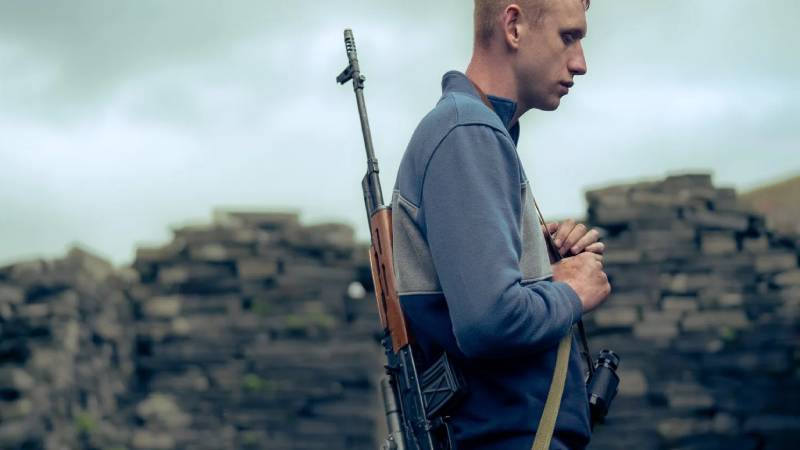
FB – Yes, we did. It was essential for us to ensure that even the smallest moments, from the way a weapon is held to the atmosphere of a conflict zone, felt authentic and respectful to those who have experienced these realities. We worked closely with individuals who had first-hand military experience, including members of the Ukrainian community, to fact-check, advise, and offer insight throughout pre-production and the shoot itself.
That said, the heart of the film was never about military accuracy for its own sake – it was about creating an emotionally truthful portrayal of one young civilian’s experience in war. The advice we received helped ground the story in reality, while allowing us to focus on the human aspects that truly drive the film.
NS – Do you expect to receive an Oscar?
FB – We are so grateful for the journey of the film. I think every filmmaker on the shortlist knows what an incredible honour it is to even be in this conversation. Rock, Paper, Scissors is a very personal film, made with a small budget but a huge amount of care, commitment, and belief from people across many countries.
So, while I don’t expect anything, I’m deeply grateful that the Academy has recognised our work and that the film has travelled this far. But no matter the outcome, we’ll continue to carry this story with pride.
NS – What will your next project be about?
FB – I’ve just wrapped filming my debut fictional feature film. It’s a political thriller and also based on a true story. It tells the story of Gülmira, a Uyghur journalist in Washington D.C., who risks everything to bring the disappearance of her people in northwest China to light. In parallel, we follow Maryam, a young woman who escapes from a brutal detention camp. Only by making enormous personal sacrifices can these two women succeed in gaining the attention of the world public.
We’ve been developing it over the past few years with an exceptional international team and the support of major European broadcasters and film funds. We are super excited for the next steps in post-production.
…
.
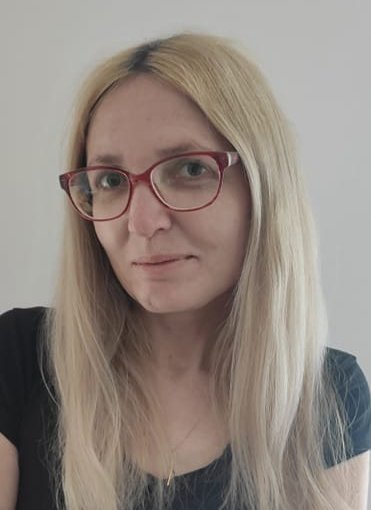
Franz Böhm is pictured at the top of this article. The other image is a still from Rock, Paper, Scissors.