








QUICK’N DIRTY: LIVE FROM TALLINN
The 29th Tallinn Black Nights Film Festival put my feet on the ground in the Estonian capital for the second year running. Again, I was entrusted with PÖFF’s First Feature Competition, which has grown into a source of genuine pride for the festival.
This year’s programme consisted of 13 titles, two more than the previous edition, representing Europe, Mexico, Taiwan, and Kyrgyzstan. Two awards, one special prize and a special mention were handed out. They were:
You can read Paul’s full coverage of the First Feature Competition by clicking here.
…
.
Overall impressions
Not to sound like a broken record, having said this before, but this strand is one of the most personal in the festival because it’s the first time a director so openly shares their vulnerability. This is worth remembering, because even though some of the directors have made numerous short films, a feature film is a wholly different prospect. As one filmmaker told me some years ago, a short film you can hold in the palm of your hand; a feature film is like a runaway train.
This year’s programme might not have read as strong on the page as last year’s, but onscreen, the lineup had some pop – space was created for the audience to enter the films and have emotional encounters with the characters and their worlds. What leapt out were the number of stories with women at their heart, which introduced the theme of imprisonment and entrapment. These prisons were not made of concrete and steel. Instead, they were emotional and psychological prisons: marriage and motherhood for Lucia (Marina Palii) in Cecilia Ştefǎnscu’s A Safe Place (Un loc sigur), and for the titular character, Juana (Diane Sedano), in Daniel Giménez Cacho’s thriller, and the nymphomaniac Nore (Dana Herfurth) in Hille Norden’s Easy Girl. Then, there’s Elena (Maria Dragus), the Romanian immigrant seeking Greek naturalisation in Stefanos Tsivopoulos’ Elena’s Shift. She refuses to be a victim of abuses of power when she’s fired, and Lady Isabella in Samuel Abrahams’ Lady, a lonely woman whose privilege has imprisoned her.
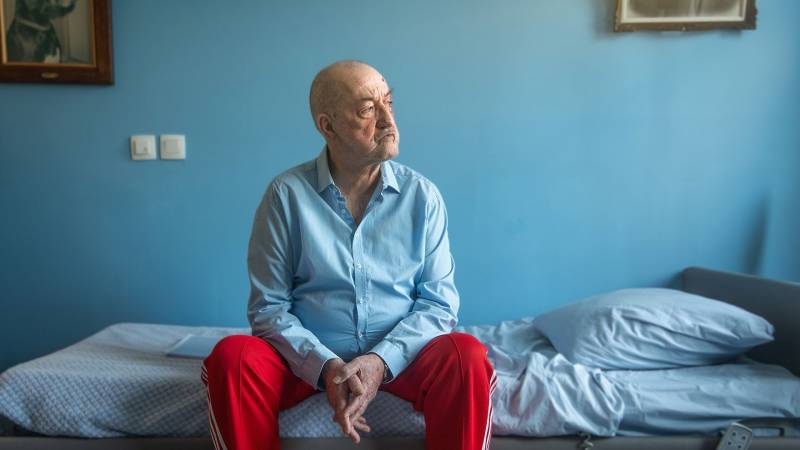
Curatoer Triin Tramberg, however, was careful to juxtapose these female-driven stories with emotionally-charged stories about men. In Hercules Falling (Herkules Falder), Youseff (Dar Salim), a Danish soldier suffering PTSD visits a retreat to heal and reconnect with his family. Then, there’s Horst (Josse De Pauw) in Sunday Ninth (Zondag de Negenste), whose memories are being eroded by dementia, robbing him of his identity and connection to his family, and Kasimir (Danill Kremkin) in Pascal Schuh’s Interior (Interjöör), who is stuck in an abusive relationship with Dr Liebermann (Knut Berger).
Collectively, these stories explore nuanced ideas of imprisonment and entrapment, and explore those struggles that define the human experience, where few people can say they are truly free.
.
La crème de la crème of PÖFF 29
While This is Not Happening, (To się nie dzieje) (Poland, Artur Wyrzykowski) picked up 5 stars, alongside A Safe Place, Ştefanascu elevated her film above the rest of the First Feature lineup. The first to premiere, it was simply untouchable, despite Wyrzykowski shredding his audience’s nerves with unrelenting suspense.
Romanian director Ştefǎnescu crafted a film that’s not an easy experience, but rewards those audiences that are patient, reflective and enjoy peeling away the layers of a film afterward through thought and conversation. Belonging to the art house tradition, information and characterisation happens at a slower pace. Given the brevity of dialogue and music, it asks its audience to be sensitive to body language, gestures and the cinematographic language. What is most striking, however, is that Ştefǎnscu constantly challenges her audience, and instead of offering answers, provokes them to ask themselves, what do we really know? A Safe Place is bold and confident filmmaking — a filthy genius movie.
.
What about the other riches?
Wyrzykowski’s thriller, about a father trying to save his son, a culprit in a shooting at his school builds an image of an emperor-like character being laid siege to. With shades of Shakesperean tragedy and ancient stories about the downfall of powerful men, it was a film that elevated itself above being a technical exercise in suspense.
The First Feature lineup this year showcased some wonderful technical flourishes. In Easy Girl, Norden and her cinematographer Bine Jankowski bring a subtle ethereal energy to the flashbacks that the two characters enter, creating a dreamlike feel. They also shoot the sex scenes in order to convey the contrasting experiences of sexual intercourse: the awkwardness of knowing how to communicate, find a rhythm and how to bring one another pleasure. Similarly, in Sunday Ninth, Steppe brilliantly creates a series of transitions between Horst and his brother being grounded in their reality, and disappearing into their memories. This back and forth not only transports the audience inside of a story, but the characters’ emotional space, because is there anything more personal than one’s memories?
We cannot forget Juana, a film about trauma and femicide cold cases that technically pops and stuns. Cacho and his cinematographer Lorenzo Hagerman, editor Yibran Asuad and composer Maria G C Goded, together with Diane Sedano’s lead performance, enter a psychological space, mimicking those seamless daydreams where we drift into our thoughts or imagination, before our attention is snapped back to reality. And Cacho shows an interest in exploring the cinematic form in a lively way, stunning his audience into questioning what they just saw. At a certain point, it’s as if the film has split into two, with an alternative reality running in parallel, and unseen. And Quentin Hsu’s Admission turns the camera into a wandering eye, that is not the exclusive presence of Hsu and his cinematographer Aymerick Pilarski, but an autonomous one that heightens the film’s themes of voyeurism.
…
.
You can read Paul’s full coverage of the First Feature Competition by clicking here.


