








Born in a small village in Transcarpathia (Western Ukraine), this cinematographer and filmmaker has signed seven movies, and he is now on his fourth feature film. He received multiple awards for his various works in events such as the Molodist Kyiv International Film Festival. His debut feture documentary Mountains and Heaven in Between (2021) screened internationally at Sheffield DocFest, FIPADOC, DOK Leipzig, Krakow Film Festival, and other festivals. He is a regular in industry and laboratory events such as Sunny Side of the Doc, DOK Leipzig Co-Pro Market, East Doc Platform, Baltic Sea Docs, CEDOC Market, and Eurodoc. His latest work Divia – a largely sensory and hypnotic doc about Russian aggression on Ukrainian soil, with a focus on te landscape – premiered in the Official Competition of the 59th Karlovy Vary International Film Festival.
…
.
Joshua Polanski – Who is Divia?
Dmytro Hshresko – Divia is my way of reimagining the deity of the Slavic goddess of nature. I was inspired by Greek and Roman mythology where there is the goddess of nature Minerva, and I wanted a Slavic counterpart, since the events take place in the territory of Slavic peoples.
JP – Where exactly in Ukraine did you film? How safe was it at the time?
DH – We filmed across Ukraine – from Kyiv and Chernihiv regions to Kharkiv, Donetsk, Mykolaiv, and Kherson. We started filming right after the territories were liberated – the de-occupation gave us a brief chance to document the destruction. We also used archival drone footage from friendly organizations to show national park areas already occupied by the Russians. Now such filming is nearly impossible: the front line has moved deeper into Ukrainian territory, and Russian forces control many of those areas. Drone attacks target not only soldiers but also journalists – recently, a French reporter was killed by a Russian drone despite wearing a bulletproof vest marked “press”. When we were filming it was a little safer, but there was a constant threat of shelling, sometimes a few hundred meters away. Plus, there are mines everywhere and it’s easy to step on them if you don’t look under your feet.
JP – What drone(s) did you use in the filmmaking process? What was that process like?
DH – We used a regular Mavic 3 Pro, as it was important to quickly launch it and film it before the Russians discovered it and started shelling. In general, filming with a drone in Ukraine is now prohibited, but we did it together with the military or deminers, and this protected us from friendly fire.
JP – Drones have played a key role in Ukrainian resistance to Russian military aggression, especially early on in the invasion. Was this a consideration at all when using the drones to capture the aerial footage?
DH – When we filmed in 2023-2024, drones were not yet so widespread, FPV was just starting, and ordinary Mavics were mostly used for reconnaissance. That is, then it was possible to film 10-20 kilometres from the front relatively safely. Now it is impossible.
JP – The ambient and very digital sounding score from Sam Slater makes for an interesting contrast with the natural images, especially considering the destruction of those natural images as the film progresses. Can you say more about working with Slater and the process of defining the music of Divia?
DH – Sam and I wanted the music to feel like the ghost of nature – something organic that had passed through a machine. His score combines digital textures with fragments of field recordings we captured in destroyed forests and wetlands. We didn’t want a traditional emotional soundtrack, but rather a presence that mirrors what nature sounds like after trauma. The process was very collaborative – Sam composed while I was still filming, so the images and sounds evolved together, influencing each other in real time.
JP – In the credits, in the “special thanks” section, you give somewhat prominent attention and thanks to various state agencies, members of the armed forces, and other governmental positions. Did you think of the state as a co-creative in the process of making this film?
DH – Yes, but not as a creative partner. The state and its institutions made the film possible by giving us access to restricted territories and helping ensure safety during filming. For example, employees of the Ministry of Environmental Protection and Natural Resources of Ukraine guided us to key locations and areas where nature had been most damaged by the war. The military also helped us with archival footage of battles that would be impossible for a civilian crew to film. Without this cooperation, we simply couldn’t have reached those places or shown the true extent of destruction. Still, Divia remains an entirely independent artistic work – our dialogue with the state was practical, not ideological.
JP – It seems that Netflix provided some support to the film. Would you be willing to say a little bit about their involvement? Is this going to Netflix?
DH – Netflix was part of the film’s grant support – not a producer or distributor. They launched a programme to assist Ukrainian films in production together with the Ukrainian Film Academy, and Divia received one of those grants. Honestly, that support was the push that allowed us to start filming at all. There’s no current plan or agreement for the film to appear on Netflix; their involvement was limited to that early stage of development funding.
JP – The image of the tree at the end, standing powerfully and tall, is a hopeful image to place at the end. It was here long before and will be here long after. How key was remaining hopeful to the story you sought to tell?
DH – Hope was essential but not in a naive sense. The tree at the end is not just a symbol of survival; it is a witness. It has seen peace, destruction, and rebirth. For me, it represents continuity and nature’s ability to endure even when humans fail to protect it. In the film, we wanted to show both the fragility of nature and its incredible power to regenerate. I didn’t want Divia to end in despair; I wanted to leave space for quiet hope, the idea that something larger than us still carries on.
JP – Are there any specific ways you’d like to recommend readers to support Ukraine right now?
DH – Honestly, the most direct way to support Ukraine is to help it defend itself. The more defensive weapons we receive, the more Ukrainian soldiers will survive. But I also understand people who don’t want to contribute to military aid – there are many other ways to help, such as supporting displaced families who lost their homes or soldiers undergoing rehabilitation. Most importantly, we need help in fighting Russian propaganda and false narratives suggesting that Ukraine can simply “stop the war”. Believe me, if Russia stopped attacking us, the war would end the very next day.
JP – What’s next for you?
DH – After completing Divia, I joined the Armed Forces of Ukraine. I now serve in the Cultural Forces unit, where I create content – documentary materials, projects that support soldiers morally and psychologically, and cultural initiatives. It allows me to combine service and creativity, continuing to explore the themes that matter most to me.
…
.
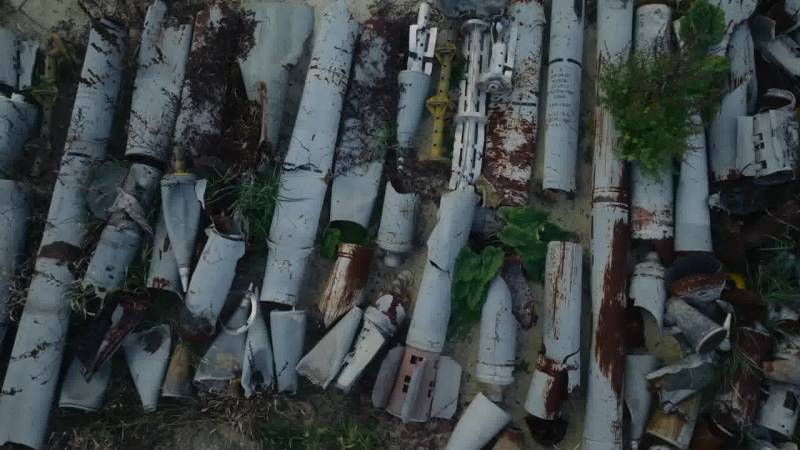
Dmytro Hreshko is pictured at the top of this article; the other image is a still from Divia.


