








How time flies! It’s been 30 years since the Australian classic Priscilla, The Queen of the Desert {Stephan Elliot) burst onto our screens and helped to catapult drag culture onto the mainstream.
Underlying the glitz, the sequin and the unforgettably Camp sequences (such as the I Will Survive dance number, in the video below), Priscilla is laden with pathos. It deals with topics such as homophobia, transphobia, family secrets, and other taboos of the LGBT+ experience. It is the kind of film that could only have been written by someone with first-hand experience of being queer, as is the case of director/screenwriter Stephen Elliot.
.
A road movie glittered with joy and sadness
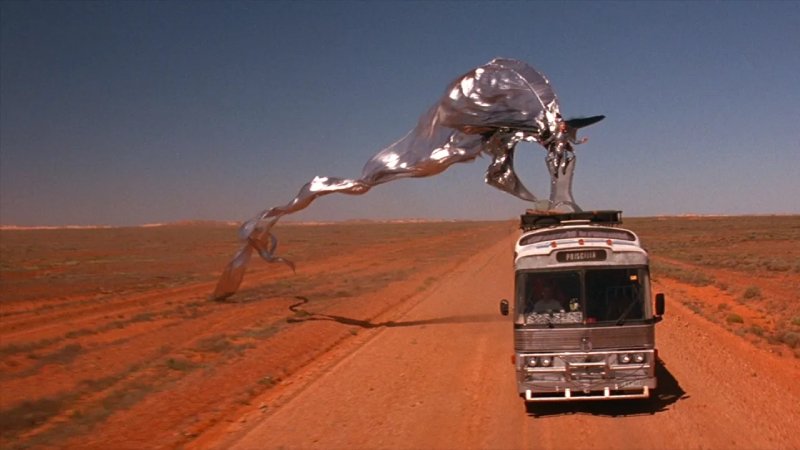
Priscilla revolves around a journey from Sydney to Alice Springs, in remote central Australia. Anthony “Tick” Belrose (drag named Mitzi Del BraTick), played by Hugo Weaving, accepts an offer to perform his drag act at the Lasseters Hotel Casino Resort, which s managed by his estranged wife, Marion. He persuades fellow performers, Bernadette Bassenger, a recently bereaved transgender woman played by British film legend Terence Stamp, and Adam Whitely, a flamboyant younger drag queen whose stage name is Felicia Jollygoodfellow (played by the charismatic Guy Pearce) to embark on the adventure. They set off for the casino season on a large tour bus, christened Priscilla, Queen of the Desert.
They must journey through the stunning vistas of the Australian outback, famous for its otherworldly light, as well as small town folks who are not quite used to the idea of blokes in frocks, to say the least. This clash of cultures offers the biggest moments of comedy relief (Bernadette outdrinks a local bigot) as well as of darkness (the queer-bashing of Tick, a homophobic slur graffitied on the bus). The true highlight of the film remains the fulfilling of Adam’s long-held ambition of riding through Kings Canyon in full drag costume. An image of such visual impact and beauty that became an instant classic of film iconography.
The proceedings take an emotional turn when it is revealed that Tick is still married to Marion and they had a son together, Benjamin, and that they will be reunited with after a long time apart. Tick is very apprehensive of the reencounter. Fortunately, his son is fully supportive of his dad and his splendidly outrageous career. When the run in Alice Springs is over, Tick, Adam and Benjamin return to Sydney after the Alice Springs run is over. Bernadette stays, in company of Bob (Bill Hunter), a love-bereft loner who had joined the road trip halfway.
.
One swallow doesn’t make a summer
Stephen Elliot’s sophomore feature is one of a slew of films to come out of Australia and garner praise throughout the world in the 1990s, when Aussie cinema enjoyed something akin to a new wave. Several movies hit a note with global audiences. They combined memorable scripts, a dark humour, grit, lavish visuals, high octane, and ironic commentary. Muriel’s Wedding (PJ Hogan, 1995) revealed revered actresses Toni Collete and Rachel Griffiths to the world. Other dirty flicks that helped to define an era include Proof (Jocelyn Moorhouse, 1991), Babe (1996) and Shine (Scott Hick, 1997).
When I interviewed Stephen Elliott I made in the late 1990s, he told me he had constructed the film around the image of a shiny piece of fabric fluttering away from the top of a float, something he had seen at Sydney’s Mardi Gras. Thirty years on, the film still looks fresh, funny and original. Much of the world has embraced drag, and young queer enjoy a lot more freedom. That has not been without setbacks, such as the state-sponsored persecution of drag queen in Tennessee. No hard-earned right and acceptance should be taken for granted.
The best way to celebrate this trailblazing film is – apart from watching it again – is to continue to paint the silver screen with all colours of the rainbow. We need more heartwarming queer stories like this. Priscilla is a movie about tenderness, bonding, resilience, complicity and tolerance. It is Stephen Elliot’s visual epiphany that delivers the message of liberation. A silver cloth flutters defiantly in the wind, while a drag queen lip syncs opera from atop a bus, under the blazing sun of the desert. The writing is emblazoned upon the desert sand: strut ahead with your head high, never mind the bumpy, barren and dry surroundings.
…
.
Just three months ago, Stephen Elliot announced that he’s planning a sequel of his queer classic.


