







Emily Brontë’s Wuthering Heights is a story about passion, class, and social boundaries. Yet in its newest cinematic incarnation, directed by British filmmaker Emerlad Fennell, something else quietly emerges. The film gradually and decidedly begins to resemble an Instagram feed. It is visually lush, emotionally heightened, and persistently torn between the rawness of nature and the seduction of the man-made, material world.
The way the film treats clothing is particularly striking. Period dramas rarely function as engines of clothes consumer desire. Because garments are typically anchored in period accuracy, viewers seldom imagine themselves wearing them. Even Sofia Coppola’s visually opulent Marie Antoinette (2006) generated more cravings for macarons and champagne than for panniers and court gowns.
Wuthering Heights begs to differ.
…
.
Cathy shops online
Costumes in Emerald Fennell’s movie are handled with notable freedom. This is not necessarily a flaw, yet it’s not without consequences. The film presents clothing in a distinctly modern, consumer-oriented way. Garments appear in rapid succession, wardrobes expand quickly, and dress becomes a tool for continuous self-reinvention. The moment Cathy (Margot Robbie) receives an entirely new wardrobe feels uncannily contemporary – less like historical dressing and more like an online order arriving in bulk.
She uses clothes much like today’s consumers do: in order to test identities, to experiment with styles, to perform subtle social shifts, and to provoke instant social media reactions. The film quietly showcases almost every online shop category – outerwear, daywear, evening wear, bridal wear, lingerie, accessories, jewellery, and so on. The effect is cumulative. Whether intentionally or not, the film risks functioning less as historical immersion and more as visual stimulation for consumption.
This impression is reinforced by the film’s striking lack of visible labour. We see garments constantly, but we rarely see the work that sustains them (both in the factory and in the dressing room). Only once do we glimpse Cathy being assisted into her corset. Elsewhere, clothes magically appear and disappear. Undressing happens with implausible ease; a hurried encounter in a carriage unfolds with the frictionless logic of fantasy rather than the resistance of layered fabric.
.
A damp squib?
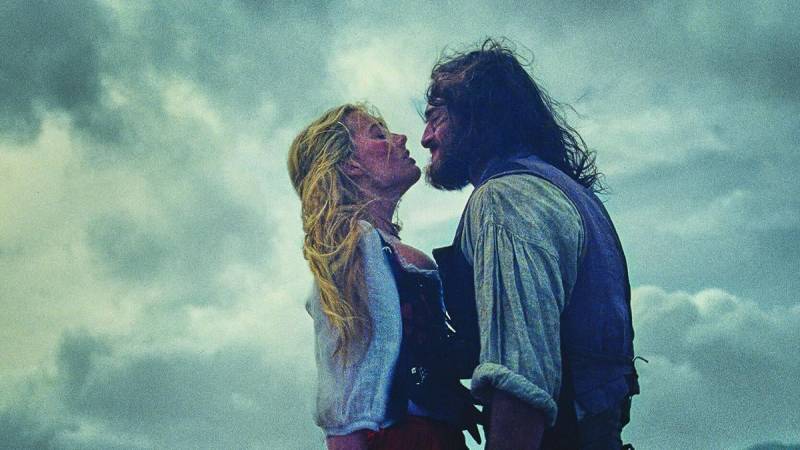
Characters are repeatedly caught in the rain, their clothes visibly drenched, yet Emerald has little interest in historicity. Who dried these garments? Where, and under what conditions? How do you prevent damp – and the persistent smell of moisture – in a pre-industrial household?
Tellingly, servants – who would historically have been essential to maintaining such wardrobes and households – are largely absent. They appear briefly in Cathy’s childhood home but are conspicuously absent in her husband’s household, where their presence would have been structurally necessary. The result is a familiar cinematic illusion: clothing without care, elegance without labour, material abundance without maintenance.
The importance of dress, however, is not limited to the film’s female characters. Heathcliff’s (Jacob Elordi) return in refined clothing and Edgar Linton’s textile-rooted wealth both demonstrate that garments enable males to ascertain authority. In this film world, power remains visibly dressed.
Textile surfaces are given unusual visual presence. Fabrics shimmer, absorb light, reveal softness, structure, and sheen. The camera lingers just long enough for the cloth to register as something more than costume – almost alive in its material behaviour. Yet this vitality is framed primarily as visual seduction rather than material reality.
.
The skin we live in
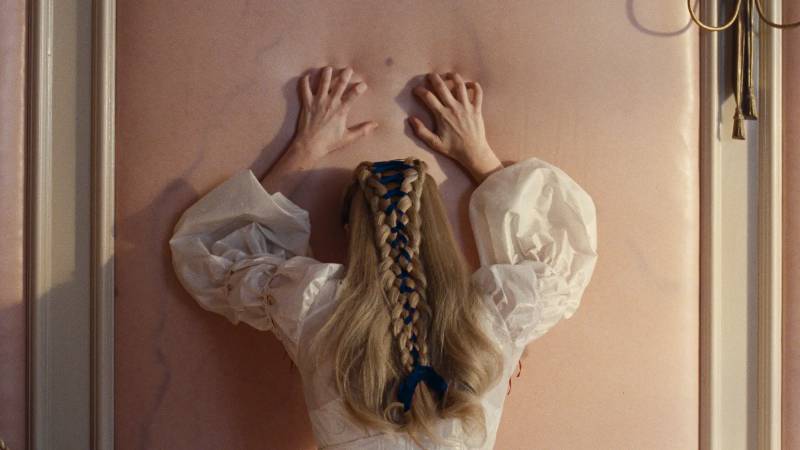
And yet the film does make one striking visual decision. Cathy’s bedroom walls imitate the texture of human skin, complete with visible veins, moles, and freckles. The effect is not merely stylistic; the viewer is clearly invited to register the wall as flesh-like. It is here that the film’s deeper material potential briefly surfaces: clothes function as the body’s second skin.
Skin – our largest organ – exists in constant contact with the material world. It absorbs, filters, and registers what surrounds it. In a contemporary context increasingly saturated with microplastics and so-called forever chemicals, this proximity is no longer metaphorical but materially consequential. The film does not pursue this line of inquiry explicitly, yet the visual rhyme between wall, skin, and garment quietly points toward a more unsettling entanglement between body and material environment.
.
Decay vs consumption
Moments like Cathy’s blood-soaked hem linger precisely because they disrupt the frictionless clothing narrative. Anyone who has ever tried to remove blood from fabric understands the stubborn physicality the film carefully avoids. This tension may explain why Wuthering Heights can feel, at times, less like a historical drama and more like a visual mood board hovering between romantic decay and lifestyle aspiration. The film is caught between two regimes: the unruly material world of mud, blood, and weather, and the highly managed visual order of contemporary consumption.
What remains largely unacknowledged is the middle ground between these poles – between the “savage” and the over-civilised, between material necessity and aesthetic excess. It is precisely this missing middle that makes the film so revealing. In glossing over labour while amplifying wardrobe spectacle, Wuthering Heights inadvertently mirrors the logic of contemporary fashion culture.
Clothes come and go. Identities shift. Surfaces remain immaculate. What quietly disappears is the work – and the responsibility – that makes such transformations possible.
Wuthering Heights ultimately gestures toward a reality the film itself only partially acknowledges. Beneath the heightened emotions and romantic excess lies a far more persistent force: the clothes that quietly regiment bodies, environments, and outcomes.
…
.
The three images on this article are stills from Wuthering Heights.