








A character lights a joint in a dim apartment. Audiences already know something about this person. They understand their worldview and social circle. They sense their relationship with authority. All this happens before anyone speaks a word.
Cannabis in cinema does more than decorate sets. Directors use it to show character backgrounds. They signal counterculture ties. They comment on changing social views. What started as fear-based propaganda became a smart storytelling device. It now reflects real conversations about legality, medicine, and personal choice.
…
.
Early Hollywood treated cannabis as pure fear material. The 1936 film Reefer Madness (Louis J. Gasnier; pictured at the top of this article) showed users as violent criminals. Characters descended into madness after one puff. These propaganda pieces served political agendas during prohibition. Studios worked with government agencies to create scary content. They wanted to demonise the plant and its users.
The exaggeration era
The messaging went to extremes on purpose. Filmmakers showed wild physical reactions. They depicted moral collapse and social ruin. These portrayals had zero connection to reality. But they shaped public perception exactly as intended. The film industry participated willingly in these campaigns. This pattern took decades to reverse.
Research from the University of Michigan media studies department shows pre-1960s films rarely portrayed cannabis without disaster. The medium became a control tool. It stopped being about artistic expression. Directors who tried balanced portrayals faced censorship. They struggled to find distribution channels.
.
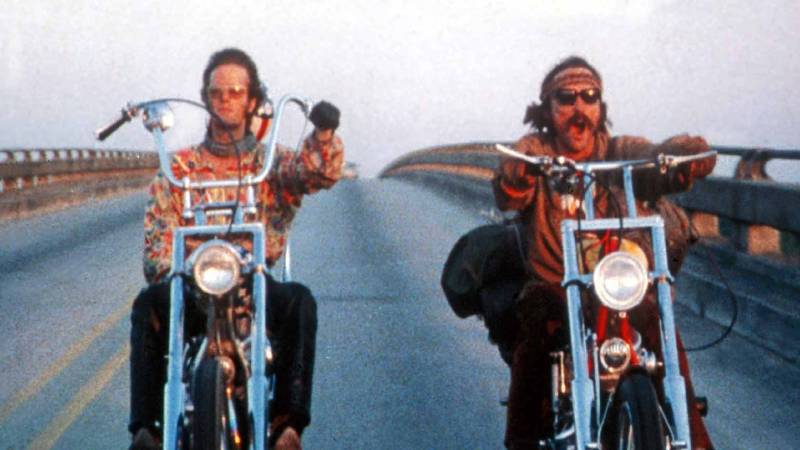
The 1960s brought major changes to screen representation. Films like Easy Rider (Dennis Hopper, 1969; pictured below) showed cannabis as rebellion and freedom. Directors started using it to establish character values fast. A smoking scene instantly communicated someone’s stance on Vietnam. It revealed their views on civil rights. It showed their relationship with traditional authority.
Authenticity became priority
This period saw filmmakers focus on realistic production details. Recreational use grew common among younger audiences. Productions needed props that looked real on screen. Many independent filmmakers started sourcing materials through wholesale cannabis suppliers. They wanted to avoid obvious fakery from earlier attempts. Audiences could now spot bad prop work easily. Authenticity mattered more than ever.
The connection between cannabis and character grew sophisticated. A businessman secretly smoking suggested hidden rebellion. It hinted at resistance against corporate life. A musician using it before performing signalled artistic honesty. Directors learned to layer meaning into these moments. They stopped treating them as simple markers of bad behaviour.
Legal reality versus social truth
Films started examining the gap between laws and real life. Characters faced trouble not from the substance itself. They suffered from prohibition laws and social stigma. This shift allowed complex storytelling. It questioned authority instead of reinforcing it. Stories could explore injustice and hypocrisy…
.
Modern filmmakers face practical challenges when showing cannabis use. Actors cannot consume actual THC products during filming. Legal and safety reasons prevent this. Production teams must source convincing alternatives. These materials need to photograph well under studio lights. They require proper texture and color. They must have realistic burning properties.
Creating believable props
Props departments work with herbal blends and specialty suppliers. They create camera-ready substitutes that look authentic in close-ups. These alternatives must produce realistic smoke patterns. A bad prop breaks audience immersion immediately. Directors shooting in legal states have more options. They can acquire reference materials easily. They work with consultants who understand product varieties.
The attention to detail goes beyond physical products. Production designers research the consumption culture thoroughly. They study paraphernalia design and social rituals. How a character rolls tells you something. How they store or share reveals personality. A medical user treats it differently from a recreational user.
Expert consultation matters
Some directors consult the dispensary staff during pre-production. They talk with cultivation experts too. These consultations help avoid obvious mistakes. Experienced users spot errors instantly. The effort mirrors research for any specialised subject. Filmmakers want credibility with knowledgeable viewers.
Shifting narratives in contemporary cinema
Recent films reflect changing legal and cultural attitudes. Cannabis use no longer automatically means rebellion. Characters from various backgrounds use it now. They take it for medical reasons. They use it for stress relief. They enjoy simple recreation without moral judgment. This normalization lets directors explore subtle themes.
Medical dramas show doctors recommending cannabis to patients. Family comedies feature middle-aged parents discovering edibles. Workplace stories include professionals who use responsibly. The substance becomes background texture. It stops being the central conflict.
Documentary approaches
Documentary filmmakers produce work examining the impacts. They cover criminal justice reform and agricultural economics. These productions need different approaches than narrative features. They share the same need for authentic representation. Directors must balance education with engaging storytelling. They need to maintain audience interest through longer formats.
The evolution mirrors broader social changes across North America. Legal barriers fall and medical research expands. Filmmakers gain more freedom for nuanced exploration. Stories examine business ethics in legal markets. They cover medical access challenges. They explore the environmental impacts of large-scale cultivation.
…
.
What this means for film analysis
Cannabis representation serves as a lens for examining media influence. Tracking its portrayal across decades reveals changing values. It shows shifting legal frameworks and generational divides. Film students can analyse these choices. Critics understand how directors communicate complex ideas through visual shortcuts.
The treatment in film mirrors its status in society. Laws change and screen representation follows. Medical research emerges and filmmakers incorporate new information. This relationship between art and society makes cannabis rich for study. It offers valuable material for cultural analysis and academic research.

