






American-born Tricie Truttle moved to the UK in 1997, where she started a career of nearly three decades at the BFI. Just last year, she took over the logistical as well as the creative functions at the Berlinale, while also becoming the first woman at the top of one of the Top 3 film festivals of Europe (Cannes, Venice and Berlin).
This change took place during a very turbulent and controversial moment for the Berlinale. Tricia’s departing predecessor Mariëtte Rissenbeek had chastised the Festival’s own award winners because they expressed solidarity with Palestine: “from our point of view, it would have been appropriate in terms of content if the award winners and guests at the Award Ceremony had also made more differentiated statements on this issue”. I attempted to interview Tricia in order to clarify whether this barbaric attack on free speech extended into her tenure, but I was not given the opportunity to do so. So I wrote an open letter instead.
The Festival approached me during the 75th Berlinale and politely thanked me for the open letter, while also highlighting that the failure to provide me with an interview with Tricia last year was unrelated to censorship but to her availability instead. They reassured that this conversation would happen this year, and they indeed honoured their promise.
The 75th edition of the event – with Tricia firmly at the helm – took place without any major disruptions. You can read out full coverage of the event by clicking here.
Tricia and I talked about the achievements and the challenges of her second year at the lead of the Berlinale. This candid and insightful conversation took place over Zoom.
The Main Competition titles (as announced on January 20th) are listed at the bottom of this interview.
…
.
Victor Fraga – This is only your second year at the Berlinale. Could you please tell us about your biggest achievements and lessons learnt in this brief period of time, particularly after having taken over most of the responsibilities from two people [former Executive Director Mariëtte Rissenbeek and former Artistic Director Carlo Chatrian]?
Tricia Tuttle – Yes, the Festival moved back to the structure it used to have for a long time, with this single oversight role. It combines the creative and the business responsibilities. It is comfortable for me, but it is a much, much bigger, a huge scale. I’m lucky to step into a very established team, with many people who have decades of experience doing their jobs. It’s not like they’re doing from scratch. But yes, it’s a lot, and it’s one of the main reasons why – as you may have seen – I soon as I came in the first thing I did was to create this layer of executive structure, with a deputy in each area of the Festival. A deputy on production hub, on finance, and so on. This enables me to work closer to the wider team. It was impossible to do this job, and to have 20 heads of department stay involved at that level. It works, but it’s indeed a lot!
VF – I know it’s only your second year, but are you able to talk about your bigges achievements?
TT – Yeah, I don’t think these changes are radical, it’s rather about getting back to the basics, and that’s an achievement. Always as a young professional I loved coming to the Berlinale because it’s easy, inclusive, you can get a badge, see films, you can really maximise your time at the Festival. I also love that the Berlinale isn’t as tiered as other festivals. Once you have your badge, there are a lot of films you can do, as well as receptions. You can meet a lot of professionals.
In terms of programme, I wanted to get back to that Berlinale that shows films for broader audiences as well as cinephile pleasures, which are the heart of the Festival. It is impossible to get some of those bigger titles unless you work for a very long time in order to bring them back to the Festival. That’s something I’m actively looking for: a handful of bigger titles every year, which shone a spotlight on the rest of the programme.
VF – Are you referring to the “out-of-competition” titles in the main selection?
TT – Yes, exactly. Those are films we always used to have, films that attract a bigger audience to the Festival. I remember someone at Rotterdam once said, which is so simple and yet true: these films are like a Trojan horse because it brings so many people into the festival, which wouldn’t otherwise realise how much is in there for them. It’s a voyage of discovery for them.
VF – But a Trojan horse is something negative, isn’t it?
TT – Yes, I think he saw it as a bit of a war strategy. That’s possibly why he used that metaphor. This approach enabled us to sell 340,000 rickets last year, a figure higher than in the previous editions. What I love about this is that audiences come to see every type of film. All of our screenings across the whole festival are at 85% capacity. That’s very consistent.
It’s been very well publicised that we have some financial challenges over the next few years. And this is not going away, in terms of raising new money. This year we had more sponsors coming to the Festival, which is so important. We need to make sure that we can close that budget gap.

VF – Could you please tell us how your background and your experience as an American programmer at the helm of the BFI London Film Festival for several years has informed your work at the Berlinale? I believe you moved to the UK in 1997, the same year as I [from Brazil]. What were the biggest advantages, and also the challenges?
TT – I never worked professionally in the US. I moved to the UK for grad school. I went to the British Film Institute’ masters programme, which Laura Mulvey taught. As straight after that I started working for Sandra Hebron and Adrian Wootton at the London Film Festival as a guest coordinator. Within five years, I moved from various jobs into being the events curator. At the same time, I took the London Lesbian and Gay Film Festival as a programmer. That was the beginning of my programming experience.
VF – But are there any particular aspects of your work at the BFI and the UK which have helped to inform your role at the Berlinale?
TT – Yes, the emphasis that we had on audiences, on looking for new audiences, particularly young audiences. That’s something that came very organically, part of a generation of BFI staff who really drove that. That’s one of my mantras: “we must make sure that this audience grows with us, keep renewing and keep those audiences excited”. That’s the biggest skill I bring with me.
VF – You are the first woman at the helm of programming at the Berlinale, and in any one of the Top 3 film festivals in Europe [Cannes, Venice, and Berlin]. I also believe that you are one of the two women at the helm of an a-list film festival, alongside Tiina at Poff. Do you think this represents a major shift or departure?
TT – Historically it is a shift, as you say – this is factual. Everyone is learning, and changing, and evolving. The whole industry is. We’ve seen a lot of changes in the past two decades. Women have been pushing for those changes. A lot of man in leadership didn’t make those changes until women got together and pushed for accountability. There has been a push for quotas. I was never a pro-quota person. I support looking at how many films were submitted by men and by women, and whether that matched the selection. Having a different range of perspectives is important. Having the leadership is also important.
VF – How does the female gaze of the curator inform your decisions? Is there an alignment between the female gaze of the filmmaker and the programmer?
TT – That’s such a complex question and I can’t answer it too simply because I would say that different programmers have different strategies. And I would like to have a team with different programmer strategies. We have more than 100 programmers at the Berlinale.
VF – Please allow me to simplify the question: are there any qualities you a as female programmer can see that your male counterparts cannot?
TT – I don’t think I’d make a blanket statement like that.
VF – Fair enough. How many submissions were there this year, and how does this number compare to last year?
TT – It’s around 8,000. It’s roughly the same as previous years. I’m not sure whether it’s slightly up or slightly down. I think it’s slightly up.
VF – I believe last year eight out of 19 films were made by women. Should we expect a similar number this year, and is that relevant?
TT – Yes, it’s totally relevant. I would imagine a similar number because we do always – and it’s not necessarily because we forced this to happen – track very closely to what’s been submitted. I think the gender gaps this year match. What I would say is that this is important to me. If we fell below lat year’s percentage, I would be questioning why.
VF – Last year Cannes sent an email boasting that nine of their films were selected for the Oscars, and last year their big winner coincided with the Academy’s (Sean Baker’s Anora). Very similar with Venice. The same does not seem to happen with the Berlinale. Is this something you strive to achieve? Or is the Berlinale’s selection wilfully more audacious and less mainstream, and we shouldn’t pay as much attention to the Oscars?
TT – I think everyone who loves festivals is very fatigued at how dominant the Award season have become year after year. That’s very related to the fact that the divide between cultural cinema and commercial cinema is becoming wider and wider. We don’t have qualitative measures anymore – except for awards and big festival acceptance. Because box office isn’t so much an indicator of success for these films. And the industry just keeps putting more and more energy into them to raise visibility of these films in a very crowded market.
I can’t change the industry. We should just be careful not to feed the beasts so much. It is important to those filmmakers that they get recognition. I think what’s nice for us is, and we normally have five or six films which are Awards contenders. They are on every category, from animation, animation short to documentary [ironically, this year’s Best Documentary Academy Award winner was precisely Berlinale’s controversial winner No Other Land, which the mayor of Berlin described as “anti-semitic”, a view Tricia refused to endorse]. We have a series that’s in the Golden Globes nominations.
VF – I would argue that last year’s Mother’s Baby [Johanna Moder], which I loved, is a horror film. Please comment on genre entries in the main competition.
TT – I think in my generation, the 1970s and 1980s, I don’t see a divide between high and low cinema. I grew up loving Brian de Palma. In the Official Competition, genre is capable being assessed for major awards like any other films. It’s as simple as that for us. This is quality, artistic, culturally relevant filmmaking.
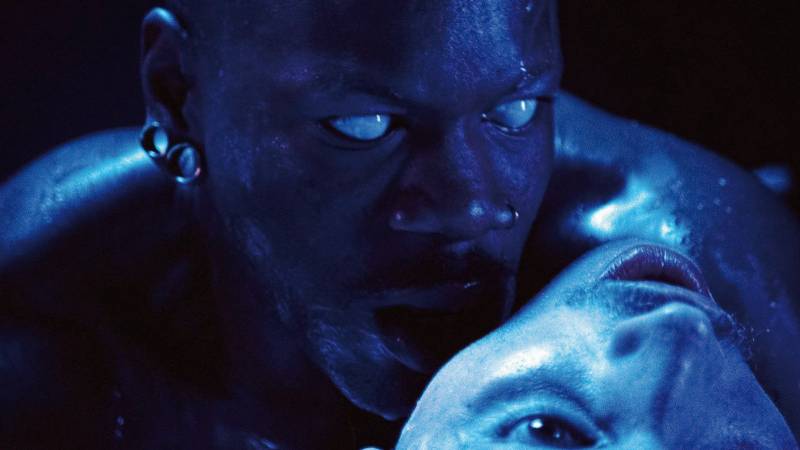
VF – Just last year, the Berlinale premiered The Visitor in the Panorama section (I produced and co-wrote the film, which was directed by Bruce LaBruce), for which I’m very grateful. That’s a political and also a pornographic feature. The Berlinale has a tradition of providing a platform for transgressive artists, and it’s perhaps the most significant platform of its kind. Do you share this view with me?
TT – One-hundred percent! We are so proud of that heritage, of the festivals. This year we have the 40th anniversary of the Teddy Awards. It’s just incredible that an a-list, prestigious film festival decided to be so forward-thinking that they embraced LGBT cinema with this major Award. I’m really proud of that fact. And also that there’s always been a space for opposition and transgression, and the intersections. Particularly in Panorama. Actually, to be fair, Derek Jarman screened in Competition! There has always been space for work that might not have received the type of legacy approval at other festivals
VF – Last year then executive director Mariëtte Rissenbeek openly criticised the festival winners for expressing solidarity with Palestine, in a press release. I expressed my concern in an open letter to the Berlinale, and I described this gesture as a barbaric attack on free speech. What measures do you have in place this year in order to ensure free speech this year. Can artists express solidarity with genocide victims?
TT – I hope you followed a lot of what we did last year. We are really advocating here internally, anywhere we can, in order to make sure that this international platform is perceived as a place for free speech. But like as with any other festival around the world, this country has certain laws. We defend free speech if it’s within the bounds of the law. That’s also a responsibility: that filmmakers and guests understand what the law is. I think we successfully managed to do that last year [in reality, Tricia is referring to the 75th edition of the Berlinale, which took place earlier this year]. I don’t have to tell anyone because it’s been in the news that Germany hasn’t been the friendliest of environments for expressing solidarity with Palestine. That’s a very real thing.
VF – Will filmmakers be free to express solidarity with Palestine? Will they be provided with any guidance as to what they can and they cannot say on stage?
TT – We’ve cleared that. As long as it’s within the bounds of the law. “From the river to the sea” has been prosecuted in certain German states. So I can’t professionally defend that phrase. Whether I agree with that law or not… it’s the law in certain states. We are not shying away from stating the facts, but also we advocate here for tolerance and the importance of aligning dialogue in discourse. Because if we don’t do that, we’re no longer credible as an international platform.
VF – Are you telling me that you are not providing the winners with any further guidance as to what they can say, aside from the law that’s readily available online?
TT – Not like a script of what people can and cannot say. One of the things that we did last year that helped people – because there are a lot of uncertainties outside of Germany – before the Festival we hosted listening sessions and Q&A sessions. We also need to ensure that our staff feel safe and confident that they can handle a conversation.
VF – Will there be a broadcast delay of a few seconds during the opening ceremony? Is that something of which you are aware?
TT – We’ve always done something like that. That’s pretty standard in broadcasting. But not specifically for the reason of speech.
What I don’t want to lose here is that we don’t want to stop free speech, but also we don’t want people to stop talking about film. It’s not a political conference, but cinema is political. What we want to do is to make space for the ideas that emerge out of the films to be discussed, if they are political. I won’t stop anyone from saying what they want to say, but we also have a political imperative to protect conversation around cinema as well. We have stopped a lot of conversations around formal qualities, artistic qualities. It’s either about who’s in it, or which awards it’s eligible for, or what’s the politics.
VF – Why should people attend the 76th Berlinale, and is there anything that makes it special?
TT – There are many things on general that make the Berlinale special. The accessibility for professionals. A delegate’s badge is relatively low cost and easy to use, and to see films. It’s inclusive. The quality of the curation is also very special to us!
VF – I look forward to unveiling your programme, and attending the 76th edition of the Berlinale!
…
.
Tricia Tuttle is pictured at the top of this article, snapped by Richard Hübner. The other two stills are from Mother’s Baby and The Visitor respectively.
…
.
And here is the Main Competition lineup of the Berlinale 2026, as announced on January 20th.