QUICK’N DIRTY: LIVE FROM TALLINN
Mexican filmmaker Andrés Clariond Rangel, originally trained as a lawyer, has built a remarkable career by breaking into one of Mexico’s most inaccessible creative industries. Drawn from law to cinema by a deep literary impulse, he refined his craft through international studies and an MFA at Columbia University before overcoming significant institutional and industry resistance to release his acclaimed debut feature Hilda in 2014. Since then, he has expanded his work through documentaries like El Poder de la Silla and continues to shape public discourse as an editorialist for Grupo Reforma, balancing his artistic pursuits with a fulfilling family life.
His latest creation Versalles just premiered in the Official Competition of the 29th Tallinn Black Nights Film Festival.
…
.
Nataliia Serebriakova – I would like to say that I genuinely enjoyed the film. It is very engaging, and the concept is fascinating as well. I am curious: why did you choose this approach? How did the idea originate? Versailles in Mexico is quite an unexpected combination.
Andrés Clariond – Yes, the intention was to satirise politicians by pushing their behaviour to the point of exaggeration and absurdity -= imagining them believing that they are a monarchy. Unfortunately, this is not far from reality. In Mexico, and I believe in many other countries as well, politicians often behave as though they are above the law. They do not follow regulations, corruption is widespread, and during their years in power they are constantly surrounded by praise, attention, and media coverage. When that suddenly disappears, the psychological impact is enormous. They must return to being ordinary people, and that transition is extremely difficult for them. This psychological unraveling of politicians was exactly what I wanted to portray.
NS – Today I read the news about Mexico and saw that two days ago there was a massive protest against president Claudia Sheinbaum. I do not fully understand the current situation in the country. I thought she represented the left wing and perhaps was doing good work. Could you please explain what is happening?
AC – Well, I believe she has good intentions, but she is part of a political party that does not allow her to act independently. Many decisions are still controlled by her predecessor, the founder of the party, Andrés Manuel López Obrador, who is supposedly retired but continues to exert influence through his son and close allies. She is certainly an improvement compared to previous leaders – she has more experience, she is very intelligent – but at the same time she must comply with many directives that are not democratic, and that is why people are dissatisfied. We have a party that claims to be leftist but in reality is not. For example, they have significantly reduced funding for culture. It is more of a “fake left,” following only its own interests rather than genuine progressive values.
NS – Main character Shema is a candidate from the Democratic Party. But he is also powerful, egotistical, and, I believe, quite a difficult person. Can we say that democracy around the world is now in danger?
AC – Yes, I believe so, because many of these extreme individuals use democratic systems to rise to power, and once they are in office, they begin to dismantle those same systems. That is exactly what we are seeing in Mexico. These politicians arrived through democratic processes, and now they are doing everything possible to remain in power while acting against democratic principles. Unfortunately, this has become very common. In the case of Versailles, he is able to proclaim himself a monarch because he is in a very small town where no one is paying attention. This allows him to behave however he wishes. He was a democratic governor in the city, but once he lost his position, he descended into delusion and decided to become the “king” of this remote town.
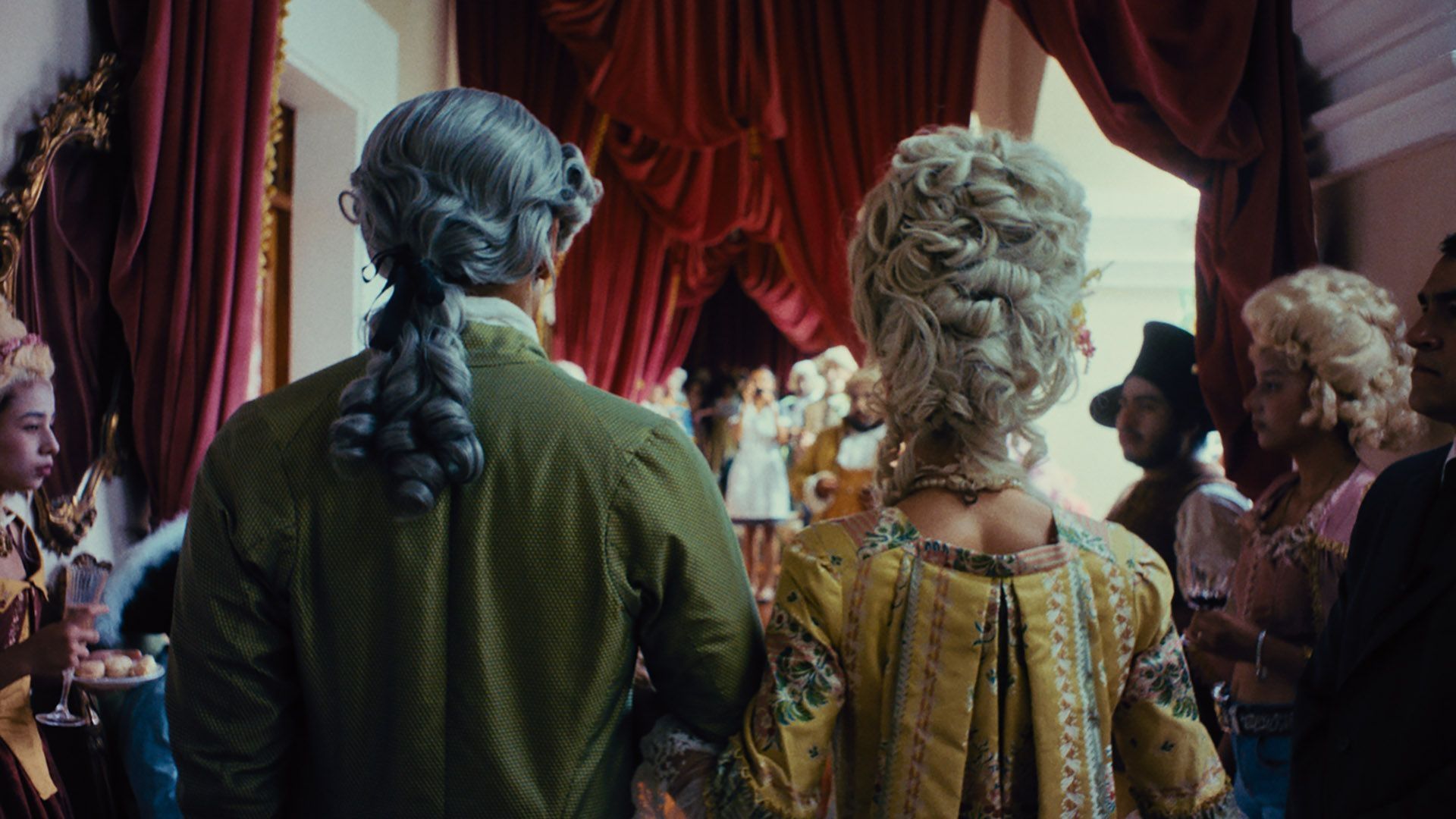
NS – How did you cast Cuautli Jiménez for main role? The lead actor delivered a remarkable performance.
AC – He is a well-known and highly respected actor in Mexico. Based on the script and the nature of the character, he needed to have darker skin, because the story includes commentary on racial issues. I auditioned around ten actors, and what stood out about him was his ability to convey vulnerability. Many actors, when portraying a politician, tend to lean into clichés – overly dramatic, forceful, exaggerated performances. He approached the character with sensitivity and allowed the audience to see Chema in intimate, vulnerable moments of suffering. That is why I chose him.
NS – His performance is very nuanced.
AC – Yes!
NS – And why did you choose an actress from Spain Maggie Civantos?
AC – First of all, because she is an excellent actress and very well known in Spain. But I also wanted to create a clear contrast because of the racial themes in the film. I wanted her to embody the Western ideal of beauty, like a princess. Despite having experienced racism, Chema grew up in a society that places enormous value on whiteness, and he chooses a wife who represents that Western standard. I am making a bit of satire out of that dynamic.
NS – There was a very funny moment when she told the children, of whom she is taking pictures, to pretend they had not eaten for two days.
AC – Yes, there is no awareness there.
NS – Did you write the script yourself?
AC – No, I co-wrote it with another writer. I was a co-writer, yes.
NS – But it is not adapted from literature?
AC – No, it is not based on anything. It is an original idea. And through that dialogue I am satirising the way many Europeans look at Latin America as something exotic or strange. There is this concept, in Spanish, called porno-miseria – the fascination with poverty. Many Europeans look at Latin America almost like a zoo filled with wild people. I am making fun of that perspective. In her photographs she wants to highlight poverty in an exaggerated way, as if suffering must always be dramatized.
NS – But it is also a commentary on colonization.
AC – Yes, very much so. That is why I chose an actress from Spain. In Mexico we still bear the wound of having been a Spanish colony. Two hundred years is not a long time historically, and we still feel the consequences of that past. That is another reason I chose her.
NS – I want to discuss the ending. I expected something darker, perhaps something reminiscent of the French Revolution – the fall of Marie Antoinette. But you chose a more satirical direction.
AC – Yes. The reason is that, for me, the essential message is that these characters commit terrible acts and yet nothing happens to them. He simply accepts a secondary political position, the “Plan B,” becoming a secretary. Then they both say, very calmly, that everything is fine and they will continue pursuing the presidency in the future. That is exactly the point I wanted to make: politicians do terrible things and there are no consequences. In Mexico, every day newspapers report massive corruption scandals. The next day, nothing happens. People forget. Everything fades, and the system continues exactly as those in power want it to continue. That is why I chose that ending: to underline the idea that they committed horrible acts and still remained in power, untouched.
…
.
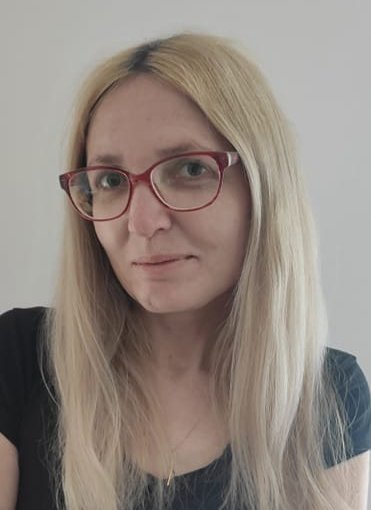
Andrés Clariond is pictured at the top of this article. The other image is a still from Versalles.