






This New York based photographer-turned-filmmaker made a career making capturing of everyday life. He has worked with leading advertising and branding agencies, in award-winning campaigns, These include Pepsi, NFL, Sony, Adidas, Nike, Microsoft, Samsung, Aeromexico, and others. His audiovisual projects were showcased at the Kennedy Center and the Carnegie Hall, while his photography work has been exhibited both in his native United States and worldwide.
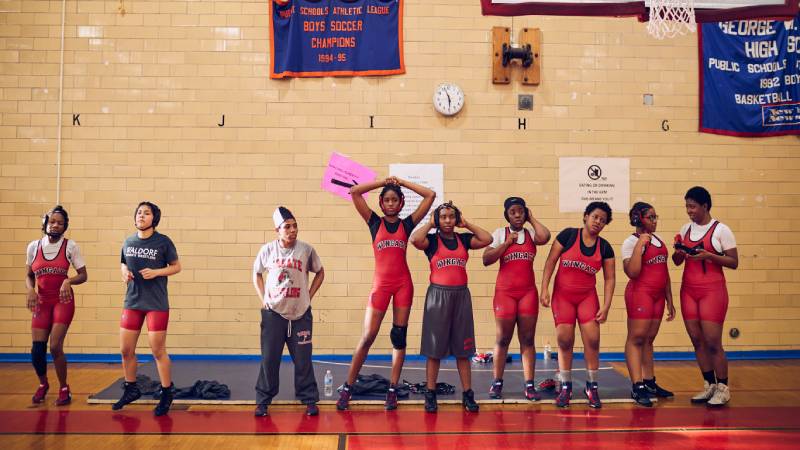
His debut feature film All American, a documentary about young wrestlers becoming “activists and well as contenders”, and overcoming obstacles in order to pursue dreams, premiered at the Heartland Film Festival.
…
.
Victoria Luxford – How did the project first come about?
Mark Andrew Altschul – I read an article in the New York Times about a programme called Beat the Streets, which was helping kids from deep in the heart of Brooklyn learn about the sport of wrestling. At the time I was making a living as a commercial photographer, shooting for brands like Nike and Adidas. I’m met the social worker at Beat the Streets who in turn introduced me to the kids in the program. I had hopes of doing a photo essay. When I got to know some of the kids and their back stories, I realized that this project was much bigger than just still photos. I called my friend Shane Sigler who is a talented DP and was also a college wrestler. We started filming the next week.
VL – What was your knowledge of the sport prior to the film? Were there aspects that shocked you during your research?
MAS – The most significant thing that caught my attention was that girls wrestled. I was a high school Wrestler while growing up in New Orleans. There were no girls in the sport, so when I began filming, seeing a few young women on the mat, often wrestling boys was something new and curious. There is also a significant amount of nuance regarding athletics in New York City. Despite New York City having eight million people and a wealth of potential student athletes, many programmes don’t exist in schools for students to participate in athletics.
VL – What are the difficulties of getting an independent documentary of this nature to the screen, in terms of funding and cooperation from institutions?
MAS – I started filming with little or no support. I spent all of my time filming & none of the time looking for funding. (in hindsight, not the best decision.) As this was my first film, I didn’t really know what opportunities existed, and what the best on ramps for success could have looked like. I now know that there are festivals and marketplaces interested in development projects. I did take part in DOC NYC’s roundtables and am grateful for the opportunity. Otherwise, this film was mostly self-funded and completely independent. Regarding getting distribution and the film to a screen, the landscape is continually evolving. It changed drastically while I was finishing the film. The chances of getting a licensing deal for an indie film from a major streamer seem quite small these days. Aligning early with partners and understanding who your audiences will be is something that should be considered early in production.
VL – Was it difficult telling a story around sport, where a shock result or injury can alter a narrative you have been following?
MAS – I never really thought of it like this. I was just filming and observing the girls’ lives. I honestly thought I would go to Fargo, film nationals, and the film would be over. I continued to film for years after that. Things kept happening and I just seemed to keep on going. I think the most difficult thing was trying to figure out how or when to end the film.
VL – How was it dealing with the more sensitive moments in the film? Is there a responsibility to be gentle around these young people going through difficult challenges?
MAS – I didn’t shy away from the difficult moments or conversations – and neither did the girls. There were times when things got heavy, but their honesty and courage always guided the process. I just listened. I felt a deep responsibility to listen and create space for them to share what they were going through in their own words, and tell their own story. I definitely think there’s a responsibility to listen and let your participants tell their own story, then protect it. I still carry that responsibility with me. It’s their story, their strength, and their voice.
VL – What has been the response been like from audiences, particularly those who might not have been familiar with high school girls’ wrestling?
MAS – I’ve had a ton of positive responses from a wide variety of people, in and out of the wrestling community. I think it’s an overall universal story despite wrestling and sport being the through line that holds it all together. I think people are responding to the heart and emotion, the hopefulness and sadness as these are universal themes in everyone’s lives. It definitely presents as a Women’s Wrestling film, but it’s so much more than that. I love that so many people are picking up on the many throughlines and nuances within the story. I’m also honoured and excited about the fact that the incredible group of women who have pushed the sport over the years to greater acceptance nationwide via recognition through colleges and state sanctioning are huge champions of the film.
VL – How about people from within the sport, what has the feedback been like?
MAS – Honestly it’s been incredible. The film has been on a lot of people’s radars for a long time as it took a long time to make it. Now that it’s finally out, and people are getting a chance to see it, the response from the Wrestling community has been indescribable.
I’m so grateful for the help and guidance I received from people within the community while making this film. Additionally, I’m proud to be able to give this film to the community in the hopes that it will bring more recognition, acceptance, and support for the sport and young women around the country and hopefully the world.
VL – One of the more heartbreaking moments for me was the unknown fate of Arham. Has there been any contact from her since the film’s completion?
MAS – I wish I had better news to report, but sadly I don’t. I’ve tried to find her, with certain resources, but sadly I have no new news.
Not knowing about Arham’s well being is something that haunts me daily.
VL – What do you hope for the future of the sport?
MAS – That it continues to grow and thrive so that other athletes, regardless of gender, weight, location, or financial resources have the opportunity to partake in the sport. I’d like to see Wrestling be as popular as boxing or MMA. I’d like to see more colleges offer varsity women’s and men’s programs. I’d like to see more opportunities like Beat the Streets pop up in more cities and towns around the country. I know how valuable those community programs can be for kids. I’d like to see more women coaches, as I think women could be coached by women or at least have the opportunity to be coached by women if they choose. I’d like to see more women in leadership roles within Women’s Wrestling.
And I’d like to see more national support on television, especially for our amazing athletes, men and women, who are some of the best on the world stage.
VL – Finally, do you have any other projects coming up?
MAS – I started working on a few projects but nothing that has completely taken shape yet. I’ve put so much time and heart into All American and I’ve just started getting it out into the world. I want to enjoy that for a short while before I turn my attention to another project full time.
…
.
Mark Andrew Schul is pictured at the top of this article; the other image is a still from All American.


