







Boyd and J. Markus are brothers who grew up in Idaho and moved to southern California (which they describe as their “ancestral lands”) in order to make films. The duo worked together on various projects and different roles for more than a decade. These include web series For The Win and Food Quest, as well as their award-winning short film Limbo (2020). They founded production company Chiefs over Kings in 2023, the organisation behind their debut feature If You Should Leave Before Me. This movie, which “confronts grief in a way that never comes close to being maudlin”, premiered at the 33rd edition of the Raindance Film Festival. Click here is order to read this writer’s verdict of the film.
…
.
Victoria Luxford – How did the idea for the film first come about?
Boyd Anderson – During Covid, there was so much free time to write and do the creative stuff that always seems to get put on the back burner during our regular, busy life. Well, we didn’t write anything during that time. We wasted it! So we challenged ourselves to write a full feature in one month, to make up for the lost time. This is what poured out in those four weeks.
J. Markus Anderson – During Covid, both my in-laws passed away, along with our grandmas. This all had a huge impact on my life, so I think it seeped into the writing. It wasn’t a conscious decision to write about grief, but when you write from the heart, the truth pours out.
VL – The central relationship is so pivotal to what makes the film work, was it difficult finding the right leads in Shane P. Allen and John Wilcox?
JMA – It happened so naturally. We always do blind table reads of our scripts. We invite actors that we have worked with before, or just want to meet, and we have them read our script, without any knowledge of what the characters or story is at all. It’s fun for the actors, and really beneficial to us to hear the story from new voices, and you can really feel when things are working or not.
BA – John and Shane showed up and read for Mark and Joshua. I remember halfway through the read thinking, “Holy shit, these guys a real couple!“. It was so natural, they were reaching across the table, holding hands and crying. They set such a high bar for casting. We did do auditions but we always just kept coming back to them. It was just meant to be.
VL – Was it always the intention to make the central characters an older gay couple? The film maintains a refreshing balance of making their sexuality part of the story (comments about “secret love” and the disdain of Gunther), without resorting to stereotypes.
BA – Man, it’s hard to remember those writing days, the whole thing is kind of a blur. I think there was a really early idea of a woman and a man, but that never even made it onto the page. We really wanted this to be a universal story of grief while still maintaining the characters’ truths. We wanted to show how long term relationships are so unique while all having similarities, whether that be a straight couple or not, we’re all just human and grief affects us all.
JMA – They were definitely a long term gay couple in the first draft, this was something we wanted to make sure we presented authentically. It’s not a coming-of-age or coming-out story. It’s an end of life story, so these things aren’t on the characters’ minds. We wanted to make sure we created real people and not have stereotypes or caricatures.
VL – The film establishes “rules” about Mark’s responsibilities, the doors, etc, but keeps information about The Afterlife purposefully unspecific. Was that always the intention? Are there difficulties in writing about something as emotive as “what comes next”?
JMA – In early drafts we had each of the side characters have different religions and the idea was kind of aiming towards whatever these people believed was true, so not giving a specific answer.
BA – We decided to leave it all up for interpretation because this is not a story about what happens after you die. It’s a story about living after you lose someone you thought you couldn’t live without.
VL – The people that Mark and Joshua help have their own compelling personal stories, talking of forbidden love, imagined love, and the loneliness of hate. What made you focus on those subjects?
BA – There’s a lot of layers to each one of these. I don’t want to spoil it all too much but each has something to do with Mark’s personal guilt and grief. Lessons for him to learn before he can … not move on, but move forward.
JMA – When you write a scene, and even more so when you are revising, you have to make sure every scene is serving the main story. All of these little vignettes are really a reflection of Mark and Joshua, and you can see from Shane’s performance in these scenes – he’s not always responding to what the other characters are saying or doing, but responding to his own reflection of what it means to him personally.
VL – How did you maintain a consistent tone for the film, given the variety of settings?
JMA – Thank you for noticing this. The tone was something we knew had to be the constant through line. There were days on set where we weren’t sure this was gonna work. Especially in the fight scene and cardboard world. It was just so wild.
BA – We knew that Mark and Joshua’s relationship had to be not only believable but relatable or inspirational. The worlds shift so much that if you don’t care and enjoy the main two then we’d lose our audience.
JMA – The tone relies on Mark’s experience in his own grief. We follow him through these fantasies which could be real or maybe just his imagination but either way we experience it with him.
VL – How did you design the apartment set, and the effects of the emerging doors?
BA – Markus and I come from a construction background. So, we designed and built the whole house. In a world that’s pushing for AI and green screens, we wanted to do as much as possible in camera. The doors appearing being one of those many things. It wasn’t easy and actually never happened how we originally planned. We had test shots where they completely broke through the walls, but on the filming days we kept running into problems, and resetting the walls took forever, especially when Markus and I were the ones resetting them.
JMA – The actual design came out of doing shot lists with Dan [Dan Watt, Cinematographer], we had this empty warehouse and we would just talk through the whole movie and decide “where do we want the camera, the characters, etc.” So from this we taped out lines on the floor for the actual size and shape of the worlds. We wanted it to have a certain aesthetic, I’ve heard it called grandma-core, so finding specific tile and wallpaper, coloirs, all came from looking at reference photos. But the real fun was installing the hydraulic lift into the living room floor, which I accidentally broke the day before we needed to use it.
VL – Each person Mark and Joshua visit has their own unique aesthetic; can you talk us through the process of establishing those looks and your collaboration with the production designer?
BA – We didn’t have the budget to hire a full on production designer for the entire film, so most of everything you see is the two of us throwing it together. Gunter’s room was literally thrown together on a Sunday afternoon before shooting. We knew that was going to be the case from the script so we wrote it with stuff we knew we could do in mind. Now, that doesn’t mean we didn’t have tons of help, from our partners helping with wardrobe and getting cardboard boxes to our friends simply volunteering to help paint and decorate walls.
JMA – Can’t forget the MVP, our cousin Jake. He would do everything and anything, paint the walls, spray popcorn ceiling, run to Walmart and get snacks. He did it all. We did hire Nico and Ava (Nico Pliskin & Ava DeCapri – Trapdoor Studio) for cardboard world. We had no idea what that was going to look like, and they killed it. This was a fun experience of them bringing us options for what the trees would look like. Some of them looked like real trees! But we kept saying: “make it look like a kid’s play!”. We let them just create the whole world and it looks so cool.
VL – What do you hope audiences take away from the film?
BA – I hope it makes audiences feel connected, feel not alone. Especially people who are going through grief. Grief is an isolating thing, and it’s something we all have or will experience. I hope this reminds people that they aren’t alone in that and that it’s part of the human experience.
JMA – I hope people have a conversation with friends about what the film means to them. We’ve had a ton of really interesting thoughts and theories presented to us after screenings and I really enjoy hearing those.
VL – What projects do you have coming up?
BA – We are currently in the development stage of a horror film, Redwater. If You Should Leave Before Me explores the ideas of grief while Redwater explores the topics of greed and rage.
JMA – We like to call it a parable. A family moves up into the Oregon mountain range to set up their logging business, but awakens an evil in the woods. We want this film to be a combination of psychological horrors like The Shining [Stanley Kubrick, 1980] and full on monster films like The Thing [John Carpenter, 1982].
…
.
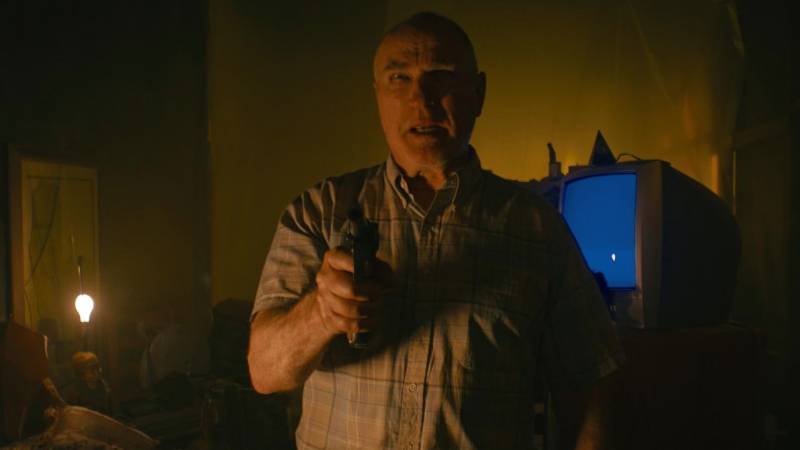
The two directors are pictured at the top of this interview. The other image is a still from If You Should Leave Before Me.


