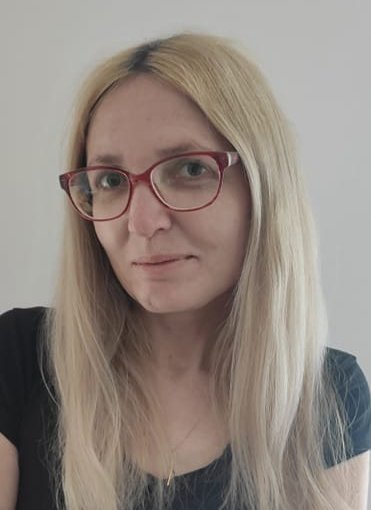







Tamara Stepanyan was born in Armenia and knew from an early age that she wanted to make films – despite being told that filmmaking was not a path for women. She studied cinema at the Lebanese American University and later specialised in documentary filmmaking at the National Film School of Denmark, in Copenhagen. For the past 14 years, she has been based in France, where she has directed several films.
In the past two decades, her work has received prestigious awards worldwide. This includes Best Documentary at the Busan International Film Festival, Best Director at the Boston Film Festival and Best Documentary for Those From the Shore and Village of Women at the Golden Apricot Yerevan International Film Festival. Tamara Stepanyan’s new film In the Land of Arto opens the 78th edition of the Locarno Film Festival. It marks her narrative feature debut, following a body of work in documentary filmmaking.
…
.
Nataliia Serebriakova – In your director’s statement, you write that Armenia haunts you “like an amputated limb.” What is it that keeps drawing you back to this ghost-like homeland – in your films, in your memories, in your work?
Tamara Stepanyan – I left Armenia 30 years ago, when I was only 12. I’m 42 now. And I think I’ve spent my whole life trying to reconstruct a sense of home – a land, a space that I could truly call mine. When you’re deeply rooted in a country – in its language, its culture, poetry, cinema, and theatre – it’s incredibly painful to be cut off from it. It’s like severing a muscle: you feel the pain long after the cut.
When I arrived in Lebanon, I was a very sad child. I didn’t want to leave Armenia. But I had to – it was the collapse of the Soviet Union, and like many others, I had no choice. You know that reality too. And over time, I realised that a part of me had been severed – and when a part of you is cut off, it continues to hurt. You’re always aware of that absence. It’s like something calling you back – that’s why I describe it as an amputated limb: something that hurts and keeps pulling you home. That’s also why I return to Armenia so often. I’ve made almost all my films there. Even the one I made in Marseille was about Armenians. It’s a presence that’s always hovering, always haunting – and I think that’s the essence of the immigrant experience.
NS – Could you please elaborate? Is there something autobiographical in how Céline is portrayed?
TS – When I first started working on this film – more than 10 years ago – I actually felt closer to the character of Zar, not Céline. Zar is more of a warrior type: someone who lives a double life, who is untamed, childless, strong, wild. That’s who I resonated with back then. But as time passed, I began to feel more connected to Céline – to her anxieties, her searching. My characters often reflect collective memory, collective trauma, questions of identity. And in that sense, I do feel close to Céline. Like her, I’m an outsider returning home. Armenia is my homeland, but there’s still so much I don’t know. I’ve travelled, I’ve explored, I’ve observed – and through that, I’ve become something of a foreigner to my own country.
Also, perhaps another layer of connection comes through my own experience with death. My father passed away in extremely traumatic circumstances – not by suicide, but still very violently, just three days after the war ended. It was sudden and deeply unsettling. While he didn’t take his own life, I do believe the political situation in Armenia contributed to his death. So in a way, I understand Céline’s grief – the process of mourning, the emotional journey of trying to understand a country through loss. In French, we say you have to “traverse a line” when going through grief. Mourning has many phases. And I relate to this character – trying to bury someone properly, trying to return them to the land they belonged to.
NS – This is a fiction film, but you also work in documentary. What changed for you in the process – and how did your documentary background shape your approach to narrative storytelling?
TS – I think documentary filmmaking has helped me grow immensely as a filmmaker. When I began writing this film and later directing it – which, as I’ve mentioned, took about ten years – I had already made four feature-length documentaries and two short films for children. That decade of documentary work really shaped me, especially in terms of cinematic language.
In documentary, you develop a heightened sensitivity to the world around you – to landscapes, human behaviour, silence, decay, trauma. You listen deeply, you observe, you document real life. That practice informed how I approached fiction: how I worked with actors, how I treated the land itself as a character.
Armenia – its geography, its ruins, its haunted silence – is not just a setting in this film, it’s alive within it. Céline’s journey through the lake, through Nagorno-Karabakh, through the spaces in between – these are places I know intimately. I’ve filmed them before in a documentary context, and I came to them in fiction with deep respect. Not detachment, but reverence. I wanted to transform those real places, those real wounds, into something fictional without losing their truth.
In that sense, I feel like I brought documentary elements into the fiction, and – conversely – fictionalised my documentary sensibility. I collaborated closely with my cinematographer, Claire Mathon, who also comes from a documentary background. Together, we wanted to bring a natural, grounded texture to the fictional world.
Of course, this is a scripted film with professional actors. But in places like Gyumri – where the first 45 minutes of the film take place – we used a lot of real elements. That city, devastated by the 1988 earthquake, holds so much history. Some of the people and places in the film come directly from there. I truly believe that fiction can learn a great deal from the documentary eye.
NS – Why did you choose Denis Lavant for one of the roles?
TS – Ah, that’s a wonderful question. I love Denis Lavant. I always imagined this character – this wild soldier – as someone who could embody every war at once: the Nagorno-Karabakh war, the Armenian-Azerbaijani conflict, Russia-Ukraine, Palestine-Israel, even World War 2. I needed someone who could carry all that madness – someone who could speak many languages, cross cultural boundaries, and represent not a hero, but a kind of lunatic witness to the absurdity of war.
To me, Lavant embodies that. He isn’t just versatile – he’s fearless. He can go to emotional extremes, be both tragic and absurd, grounded and surreal. That’s exactly what I needed. I didn’t even consider anyone else. Some people told me, “But what if he says no?” I said, “Then I’ll convince him.” Luckily, he said yes. I was thrilled.
NS – At the heart of the film is a woman who slowly uncovers the truth about the man she thought she knew. How personally significant is this sense of lost identity to you – through war, through the loss of language, connection, and truth?
TS – Yes, absolutely. Céline lives with a man she believes she understands — and then she realises she doesn’t. That’s deeply personal to me. This feeling of losing identity – of suddenly realising there’s a disconnect between what you believed and what is — is something I know well.
Language loss, emotional disconnect, absence of truth – these are all part of the trauma of displacement, of exile, of war. I’ve lived it. And I wanted to explore how that rupture echoes through someone’s personal life, not just politically or historically, but intimately – in relationships, in memory, in silence.
I think this is something many people experience – living with someone for years only to realise, at some point, that you never truly knew them. Not because they’re good or bad – it’s not a question of judgment – but because some traumas, some truths, some parts of a person simply remain unspoken. Some people cannot express what they’ve lived through.
What intrigued me was the question of how far we can go in trying to uncover someone else’s secret. How much can we push to know the truth about another person? Céline lived with a man she thought she understood. But once she sets foot in his homeland, she begins to realise how complex he really was – and how much of his identity was rooted in a land she never knew.
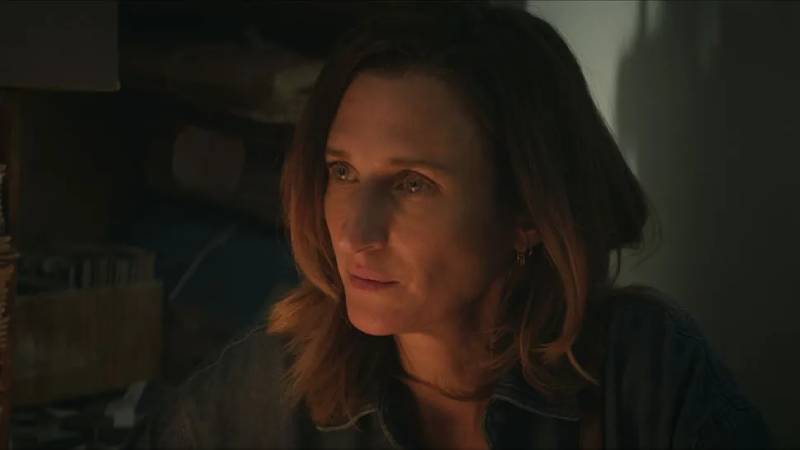
This land – Armenia – reveals another version of him. Even though he’s no longer alive, she discovers who he was through those he left behind: his former lover, his friends, the scars of war, the ruins. And I think that discovery becomes essential not just for her, but also for their child. Céline needs to know who this man really was in order to pass on a story to his son – a story that isn’t just about suicide or silence.
He wasn’t simply a man who took his own life. He was someone consumed by the trauma of war – someone who couldn’t carry the weight of his guilt, his pain. The war defeated him. And I believe it’s crucial to explain this emotional complexity to children – so they can grow up with a fuller, more compassionate understanding of their parent, and then decide for themselves who that parent truly was.
Céline says at one point to Arsine: “I will give my son the birth certificate, the nationality. And he will decide what to do with it.” Will he embrace his Armenian identity and fight – as his father did? Will he reject it entirely? Who will he choose to become? That’s why I think the film ultimately raises important questions about identity – about what a passport means, what blood means, what belonging means. What does it mean to say: I am Armenian? I am French? I am Ukrainian? Where does responsibility begin – and how do we carry it?
NS – You chose to tell this story from a female perspective – through Céline’s eyes. I have two questions: why did you make that choice, and what does it mean to you to be a female director?
TS – Let me answer the first part first. For me, Armenia itself is feminine – this land is a woman. She has endured so much: violence, violation, bloodshed, trauma. So I felt there was a natural parallel between the wounds of a woman and the wounds of this land. Yes, you could argue the story is about Arthur, the husband. But Céline has her own demons. Her own grief. And I was interested in creating a dialogue between this French woman’s fragmented identity and the wounded Armenian landscape. Arthur, in a way, is the bridge between them.
I also wanted a strong female protagonist — someone who undergoes a transformation. And I see two strong women in this story: Céline and Arsine. Céline begins as one person and becomes someone else by the end — emotionally, psychologically, even visually. She arrives almost like a stereotypical French woman, elegant, composed. But slowly, she melts into the land, becomes part of it. The landscape changes her.
On the other hand, Arsine breaks the cliché of the male warrior. She is the one preparing for revenge, planning to fight with drones and weapons. Of course, this is fictional, it comes from my imagination — but I wanted her to embody female strength and resilience. Together, these two women travel across a devastated, symbolic landscape. I was also interested in portraying a kind of sisterhood between them – a complex one, but real. Arsine helps Céline traverse this metaphorical hell, to return the man to the land, to confront the past – and, ultimately, to find a way forward.
In the end, Céline becomes a new kind of woman. Stronger, yes – but in a different way. She came strong and leaves strong, but something essential has shifted. That’s what I wanted to explore.
NS – Yeah, thank you. And…
TS – So, regarding being a female director – yes. You know, in the Soviet era, I think Ukraine had a number of women directors. But in Armenia, we had almost none. When I was growing up and said I wanted to be a filmmaker, people would tell me: “cinema is for men – go play somewhere else!”. I really disliked that mindset. I fought against it.
I went to film school, and I broke through many barriers. I wasn’t alone – for example, maybe you know Maria Saakyan? She was an excellent Armenian woman filmmaker. Unfortunately, she passed away very young. She started earlier, in the early 2000s. I began in 2008. At that time, there were virtually no women directing films in Armenia, and we had to fight hard to have our voices heard – she in fiction, I mostly in documentaries and shorts.
Part of it, I think, was a challenge – to prove that yes, we can do it. Not because we’re women, but because we’re artists. I do think I succeeded, though it was very difficult, very demanding. But I’m someone who likes challenges. When I see an obstacle, I want to break through it, go all the way. It’s not always easy – sometimes it’s scary. But I pushed on.
There was also a lot of pressure. People asked: can you handle this as a female director? Especially on a project like this, with such a star-studded cast and crew — my actors and actresses are all very well known. My cinematographer is a star. My sound designer too. Everyone on this film, except me, was already a star. But what touched me deeply was that they were all there to make my film. They said it openly: “We are here to make Tamara’s film. We are here to make your dream come true”. That was one of the most beautiful experiences of my life.
It was a French-Armenian co-production – around 10 people from France and 60 from Armenia. We shot for two months, in June and July. And honestly, I never felt small or disrespected. I felt strong as a woman, as a director. Maybe stubborn – yes – but also open. I really value collaboration.
For example, Camille, the main actresses, would sometimes arrive on set at 7:00 and say, “Tamara, I’d like to make some changes to the script. Can we talk?” And we would. Sometimes I agreed with her, sometimes I didn’t, and we’d adapt. The same with Claire (Claire Mathon, the cinematographer). I’m not a dictator type. I know what I want, and I’ll fight for it. But I also listen. I have ears that hear and a mind that wants to think and collaborate.
NS – France and Armenia share a deep historical connection. How did that influence the film?
TS – Well, I ended up in France by chance – I fell in love with a French man and moved to Paris. But yes, the historical connection between France and Armenia is very strong. If you’ve seen my second feature, Those from the Shore [2017], it’s about how Armenians came to France. Marseille was one of the first cities to welcome survivors of the genocide. The very first boat carrying Armenians fleeing genocide arrived in Marseille. That film explored the limbo of asylum seekers trying to begin a new life in France.
So yes, France has always been a strong supporter of Armenia – historically, culturally, politically. Maybe less so in the most recent war – the 44-day war in 2020 over Karabakh. I wish they had supported more. But to be honest, no European country did much. And that’s partly why we lost.
Even now, in the co-production world, France remains one of Armenia’s most committed partners. When I look at who’s willing to co-produce with Armenian filmmakers, it’s mostly the French. That support continues, and it means a lot.
And speaking of women – earlier, my lead actress, Camélia Cottin, said to me, “Tamara, even in France I’ve never seen such a female-heavy crew.” And yes, that was intentional. Of course, the crew was mixed – male and female – but I made it a priority to bring women into key positions. Our entire production management team, including executive producers, were Armenian women – incredibly strong ones. In a way, I think I was also compensating for the absence of women in these roles during the Soviet years.
…
.
Tamara is pictured both at the top of this interview. The other image is a still from In the Land of Arto.