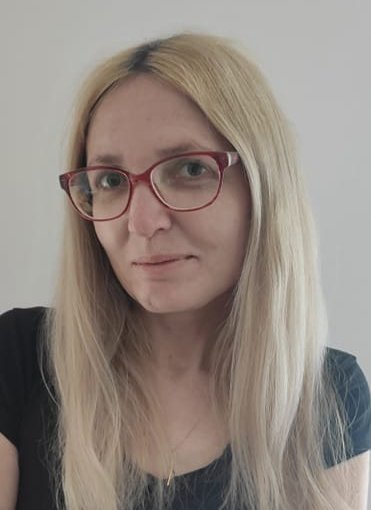




Lukas Walcher is a promising young Austrian actor working across both film and television. This year, at the Diagonale Film Festival in Graz, he appeared in three films simultaneously – Light, No Light (Matthias Van Baaren), Frutti di Mare (David Lapuch)and Four Minus Three (Adrian Goiginger). This a remarkable achievement that speaks to the intensity and growing momentum of his career. Before gaining wider recognition on screen, Walcher was also active in theatre in Graz, building a strong foundation on stage.
.
Nataliia Serebriakova – In both films Light, No Light and Frutti di Mare you play a husband or a boyfriend, but they are very different characters. Your performances are very strong, impressive even. How do you create such different characters? What is your psychological approach when preparing for a role?
Lukas Walcher – We have to separate the two characters. On the one hand, Frutti di Mare is directed by David Lapuch, whom I have known for many years. We worked together on a short film and then became friends. I understand how he builds characters and how he approaches comedy. I did not try to be funny, because that is always the wrong approach. The character has to have real problems in his life, and then the humor emerges naturally from the situation.
With Light, No Light, it was very different. I focused on expressing the inner emptiness of the character. I wanted to create a sense of emotional disorder. For me, that kind of role is more difficult.
NS – In Light, No Light it seems that your character has secrets. At some point, I even thought he might be capable of violence. But the director never confirms anything.
LW – That is the point. It is about possibility. The audience projects their own fears onto the character. For me, it was not important whether he is a criminal, but rather what he feels inside. I focused on his inner life, his longing and emptiness, instead of what he might or might not do.
NS – So you focused on the inner monologue of the character?
LW – Yes, exactly. For example, the car becomes a kind of shelter for him, a space where he withdraws from the outside world.
NS – It also feels like he expresses a certain psychological tension in his relationship.
LW – Yes, I tried to soften that during filming, but the director wanted the character to remain harsh. That was challenging for me, because I tend to look for more empathy in a character. I tried to show small moments of kindness, but there is really only one scene where that appears. Otherwise, he is quite unpleasant.
NS – How do you see the film in terms of moral dilemmas and justice?
LW – I think the main storyline is about law, guilt, and justice. The relationship is more of a secondary layer. The film works a lot with the audience’s imagination, and that is something I really appreciated while watching it.
NS – It also feels connected to the tradition of Austrian cinema, in the style of Haneke or Seidl.
LW – Yes, especially in terms of the visual language. The cinematography by Johannes Hoss is very precise, almost like a painting. We often worked with long takes, sometimes filming entire scenes in one shot. That is not very common today, and it felt closer to theater acting in some ways.
NS – Please tell us about your work on The Devil’s Bath [Veronika Franz and Severin Fiala, 2024].
LW – That was my first major film, and it was a great opportunity. At the time, I was working in a theatre in Graz when my agent called and told me about a casting. They were looking for actors from Styria. I went to the casting, and shortly after they told me that I got the role.
The problem was that I was already committed to a theatre production. The film had a fixed shooting schedule, so I had to negotiate with the theatre director to let me leave for a few days. She was not happy about it, but I insisted. In the end, I managed to do both.
NS – What is the difference between acting in theatre and in film?
LW – That is a very good question. The main difference is in the rehearsal process. In theatre, you rehearse for six or seven weeks before the premiere, working very intensely on scenes. On stage, you use your whole body, and the audience sees everything. That can be very challenging at the beginning, because you are aware of every movement.
In film, it is different because of the camera. You can express a lot with very small gestures, especially in close-ups. It is a more subtle form of acting. Also, in theater you need to project your voice more, which is not natural, while in film acting your voice can be much more restrained and realistic.
NS – I would like to ask you about your acting method. Do you rely more on text or on physical behaviour? In theatre, you have worked with very different authors, like Sorokin, Jelinek, and Brecht. How do you approach such different types of text?
LW – It is always different, and that is what makes it difficult to answer. Every time I start a new project, I do not really know how I am going to approach it. Of course, I have certain methods, but sometimes they simply do not work. So I cannot apply the same method to every role or every script.
I try to find what works for each specific character. Sometimes I use music and create a playlist for the character. It helps me find a rhythm. It is not music I personally listen to, but rather what I imagine the character would listen to. During Frutti di Mare, I had a playlist, although I do not remember the exact songs anymore.
NS – What kind of music was it?
LW – I cannot recall the specific songs, but I imagined someone who is internally expressive, maybe even a bit playful or “dance-like” inside, but not outwardly. That helped me shape the character.
Other times I write a diary from the character’s perspective. Sometimes the entire preparation process consists of writing. I also observe people, even follow them for a while, just to study their behaviour. That becomes a kind of physical preparation. It is about experimenting and finding what works best.
NS – How did you become an actor?
LW – My parents had an amateur theatre group, so I grew up around theatre, but I never seriously imagined becoming an actor. When I was thirteen or fourteen, I knew I liked being on stage, but I did not think it could be a profession. Later, when I started studying to become a teacher in Graz, I began researching actors I admired, trying to understand their paths. That made me realise that it might be possible for me as well. Eventually, I decided to move to Berlin and pursue acting more seriously.
NS – Do you currently have any new film projects?
LW – Yes, there are a few possibilities, including one major project, but I cannot talk about it yet. I am hopeful. Over the past few years, I have built relationships with directors like David Lapuch and others. We understand each other creatively, so I hope more collaborations will follow.
NS – What do you think about the place of Austrian cinema in the global film landscape?
LW – That is a very interesting question, especially here at the Diagonale festival. I am not entirely sure how Austrian cinema is perceived internationally, but I think we produce very distinctive films. Every country has its own mentality, its own way of thinking, and that is reflected in cinema. In Austria, there is often a sense of loneliness, heaviness, and sometimes a very specific kind of humour. It is a combination of darkness and irony. Austria is a relatively small country, and outside Vienna there aren’t many large cities. Graz, for example, feels almost like a village. I think this also shapes people’s behaviour and, in turn, the films we make.
NS – What kind of films do you personally enjoy watching?
LW – That is always the most difficult question. I do not have one single favourite film, but I love Children of Men [Alfonso Cuarón, 2006]. I also like Jules und Jim [1962], by François Truffaut. I also enjoy Austrian films. One of my favourites is Indien [Paul Harather, 1993], with Josef Hader and Alfred Dorfer. It is a wonderful film.
I also watch big productions like The Lord of the Rings, but those are not necessarily my favourite movies. I just enjoy watching them.
NS – Did you grow up watching a lot of Austrian films?
LW – Yes, my parents watched many Austrian films, so I grew up with them as well. I still enjoy them.
…
.
Lukas Walcher is pictured at the top of this interview