







We are now firmly into our 10th year of intense and continuous publishing, and we are back at the Festival where it all began (the Berlin International Film Festival was the very first event that we covered, in February 2016). Our in-depth coverage this year included a total of 43 reviews, interviews and articles (up until the publication of this piece, with a few more in the pipeline). I individually watched and reviewed every single one of the 22 films in the Official Competition. The selection was resolutely superior to last year‘s.
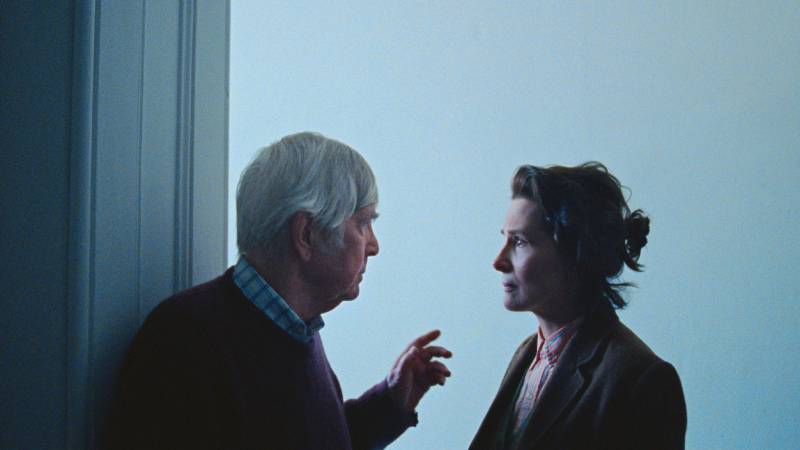
The most delightful surprise this year came from Britain. Queen At Sea is a heart-wrenching drama about dementia, consent, empathy and the limits of the nanny state. It is guaranteed to rivet you from the very first minute until the last one. It features a superb Juliette Binoche, but the real highlights are 88-year-old British thespian Tom Courtenay and 79-year-old British actress Anna Calder-Marshall. Together, the elderly actors snapped the Silver Bear for Best Supporting Performance. The film also won the Silver Bear Jury Prize (the third highest award at the event). Despite being utterly British in its content, Queen at Sea was directed by American born and LA-based Lance Hammer – unequivocal evidence that filmic sensibility is universal, as are the most essential human feelings.
Another filthy genius drama came from Austria: Tizza Covi and Rainer Frimmel’s The Loneliest Man in Town. The Austrian-Italian directorial duo did to music (namely the blues) what Aki Kaurismäki did to music in the highly acclaimed Fallen Leaves, just three years ago. In this masterpiece of nostalgia, property developers torment old-age blues singer resisting eviction. The tender humour often borders on deadpan however without losing its deep humanistic touch.
You can read our full coverage of the 76th Berlinale by clicking here.
…
.
The stormy sea of politics
The Berlinale has been rocked by accusations of complicity with the Gaza genocide since 2024, when then-Executive Director Mariëtte Rissenbeek lambasted the award-winners for expressing solidarity with Palestine (I penned an open letter in response myself). New director Tricia Tuttle, at the helm of the event since last year, has distanced herself from her predecessor: she never conflated pro-Palestine expression with antisemitism, and she has not criticised artists who express solidarity with the victims of the genocide.
The 2026 edition started with a peculiar remark by iconic German filmmaker Wim Wenders, the President of the International Jury. When asked about his position on Palestine, his answer was “we have to stay out of politics because if we make movies that are dedicatedly political, we enter the field of politics. But we are the counterweight of politics, we are the opposite of politics”. This answer was in contrast to his own history: Wenders had previously claimed that all cinema – including his own films – is political. The takeaway is very clear: Wim Wenders is only political when convenient, and this excludes Palestine.
The controversy did not stop there. More than 80 prominent artists who previously showcased their work at the Berlinale wrote an open letter to Tricia questioning the Festival’s silence regarding “Israel’s ongoing genocide against Palestinians in Gaza and the German state’s key role in enabling it”. In her response, Tricia recognised “the depth of anger and frustration about the suffering of people in Gaza, and the urgency people feel to speak out and make their voices heard”, while also defending Wenders’s right to his controversial response. She did not, however, employ the word “genocide” in her response. The Gaza genocide is internationally recognised by the UN. It meets four out of the five Physical Elements of Genocide criteria laid out by the 1948 Genocide Convention (such recognition mandates the fulfilling of just one criteria).
The Award Ceremony on Saturday included two fiery two-Palestine speeches (by Palestinian director Abdallah Al-Khatib and by Lebanese producer Marie-Rose Osta), with overt criticism of German complicity with the genocide. Instead slamming the winners (as did her Dutch predecessor Rissenbeek), Tricia defended free speech in her emotional closing notes.
. .
Golden Bear fades into yellow
The International Jury headed by “apolitical” Wim Wenders gave the top prize to a very unexpected film. A choice that dimmed the colour of the golden statuette. German director İlker Çatak’s Yellow Letters received very little attention from critics and audiences alike. It barely featured amongst the favourite movies to win. It snatched a not-so-impressive 18th place (just four spots from the bottom) in a critics’s grid in which I took part. This humble writer of yours gave the film one star. He thinks that Yellow Letters was the worst film of the event, both artistically and politically.
The film transposes oppression in Erdogan’s Turkey onto German soil. That in itself sounds intriguing and audacious. The problem is that the director does the transplantation without rhyme or reason. He simply films the developments in Hamburg and Berlin as if they were taking place Istanbul and Ankara respectively – despite that fact that these cities have no affinities at all. The outcome is an overbloated, pointless and interminable movie. More seriously, the movie tacitly proposes Germany as “the land of free speech”. This is the same country that violently oppresses solidarity with Palestine – both on the streets or inside the film world. The political criticism of Erdogan remains so vague that is barely discernible. Yellow Letters is a decidedly pseudo-political movie with a very insidious underlying message.
.
Prizes of the International Jury
Below is the full list of winners from the Official Competition of the 76th Berlin International Film Festival:
…
.
Yellow Letters is pictured at the top of this article. The image in the middle is from Queen At Sea.