







QUICK’N DIRTY: LIVE FROM THE RED SEA
Born in Cairo in 1985, Abu Bakr Shawky premiered his debut feature Yomeddine in the Official Competition of Cannes in 2018. This is no mean feat: only one or two first-time directors achieve this every year, which is possible the most prestigious distinction in the world (at least in terms of festival selection). He has since directed Hajjan (2023) and The Stories (2025), a very personal film inspired by Abu’s family story and intertwined with the history of his native Egypt.
The Stories premiered in the Official Competition of the 29th Tallinn Black Nights Film Festival. The Arab premiere took place during the 5th Red Sea International Film Festival, where I sat down with Abu for a friendly chat.
…
.
Victor Fraga – You said some very moving words about DMovies before I got the tape rolling. Is there any chance you could say them again?
Abu Bakr Shawky – I remember you review of Yomeddine, and we have come across you many times since. The first time you grabbed our attention was because of your unusual name! And then you check it out and realise it’s a really great publication!
VF – Please tell us about the relevance of having your Arab premiere in Jeddah, just a couple of weeks after your world premiere in Tallinn (where I first viewed The Stories).
ABS – Well, we’re very happy to be here once again with another film. The film was such a long and arduous journey to make. We couldn’t wait to show it to an audience. The reception yesterday was very strong!
Tallinn too was a very nice screening. It was both intimate and big. The theatre was massive. I was kind of shocked when I entered, ’cause I had no idea. It’s a massive festival, it takes place over nearly three weeks. I was so happy to be there, with a great reception and Q&A, very similar to here.
VF – Please discuss the significance of premiering your first feature film Yomeddine in the Official Competition in Cannes – only one to two films achieve this every year. – and the weight of setting the bar so high at the very beginning of your career.
ABS – [laughs] No, I don’t put that pressure on myself at all. That’s something other people do. All I want to do is to make films that I enjoy and that people will like. I make films that I would like to see in the theatre, this is my third one now. Everything else is circumstantial.
VF – So you don’t want people to watch your films online?
ABS – That’s not what I meant. Right now it’s more likelt that they will see it online because theatrical releases are getting smaller and smaller. It’s more difficult for indie filmmakers to get a theatrical release. I’m in very much in favour of people watching films online, eve on your phone. We’re slowly but surely getting to that point. That’s unfortunate for filmmakers because you want the big screen, but the reality if it makes it film accessible for someone who lives in the desert, without access to a theatre, so be it!
VF – Does The Stories have a theatrical release date in Egypt, and internationally?
ABS – Egypt and the Middle East in January. Other places aren’t confirmed yet.
VF – Your latest film depicts personal stories of Egyptians intertwined with the history of Egypt. Your film is called The Stories. I think it could have been called The History instead [Abu laughs]. Please comment on the relationship between the personal and the political.
ABS – Growing up I was hearing all these stories from my family. They were telling stories of our own family, of our relatives, their neighbours, and so on. The more they told a story, the bigger and more fantastic it would become. It would become more fictional. So I wanted to put that in the movie. Something real, the story of how my parents met, but make it fictional. The more I rewrote it the more fantastical it became. The political bits are the backdrop, but not the subject of my movie.
VF – Why did you begin your film in a year as turbulent as 1967?
ABS – Well, 1967 was a watershed moment for Egypt. It was a massive War and a massive defeat. This led to a series of events that defined the modern history of my country.
VF – Is the protagonist Ahmed your proxy?
ABS – Oh no, I wish! In every film there’s an element of someone writing themselves into it. But I’m actually someone else in the movie, who I’d rather not disclose! One of the smaller, minor characters.
VF – Please tell us more about the Austrian connection – both in terms of production and thematically. How did that begin?
ABS – I’m half Austrian, my mother is Austrian. We wanted to shoot in Austria, so we got an Austrian production company on board!
VF – A major tragedy befalls your protagonist: baldness. I think I can see some receding lines on your head. Is that a family curse?
ABS – [laughs out loud] I think it’s just the stresses of life. You begin to lose your hair and – before you know it – it’s too late!
VF – I come from Brazil, a country with an identity inextricably connected to football. I was surprised to find out that this also applies to Egypt. How did this passion begin, and does it still hold?
ABS – Yes, it’s still a big passion. Football is the national sport in many countries, and it’s often something that unites and divides families. You inherit your football team, you don’t really choose it. It becomes a big discussion at the dinner table. My father supports the same team as his father, who supported the same team and his father. I’m sure it’s the same in Brazil.
VF – Please tell us more about the uncle character, who played with Oum Kalthoum.
ABS – I had a distant relative in my family who played in the orchestra of Oum Kalthoum, and I want to pay homage to him because in an orchestra you never really get to know the individual.
VF – Would you agree if I said that humour and lightheartedness are intimately associated with Egyptian cinema? I think this is remarkably different from other countries in the region, such as Algeria and Morocco, where cinema is remarkably more somber.
ABS – Definitely! With the Egyptian people in general, I believe that humour and lightheartedness are a way of fighting the hardships. It’s a coping mechanism. It’s a very strong thing. In film, in music, in regular life. In the most difficult situations they laugh about it. Because sometimes humour is all you have.
VF – Your film depicts Jimmy Carter brokering the peace agreement between Egypt and Israel of 1979, which holds to this very day. Was that a good deal? And did that have any bearings on Egypt’s present-day relationship to Palestine?
ABS – I don’t really know anything about that, and that’s not really part of the film. These events are just a backdrop, and how the characters are changing. I hate making big statements about that because politics are not part of my game.
VF – You are only 40 years old and you have achieved so much. What should we expect from you in the next five decades?
ABS – I don’t know if I’ll live that long. I’m very blessed to do what I’m doing, and I’ll be very happy if I can carry on.
…
.
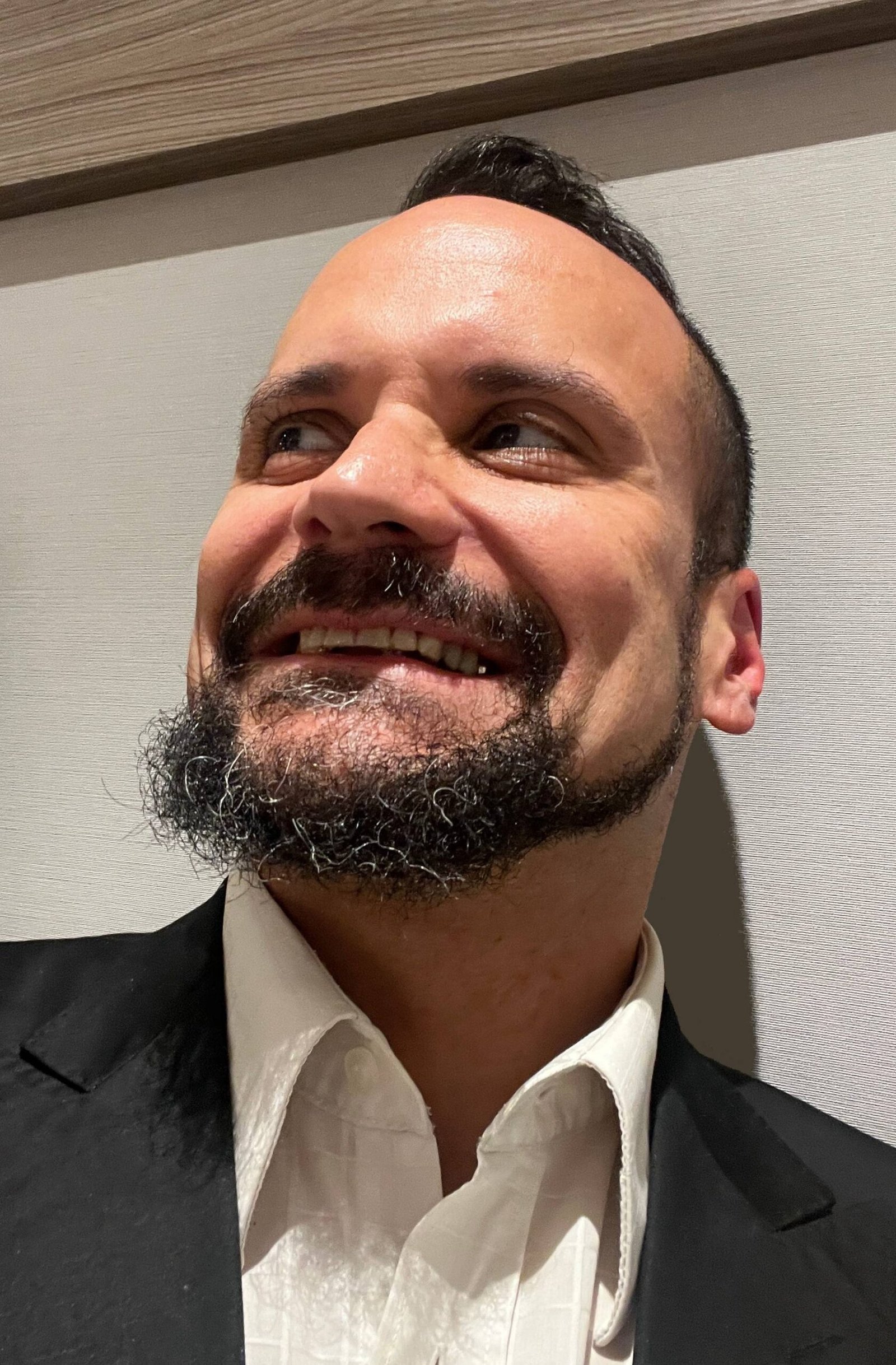
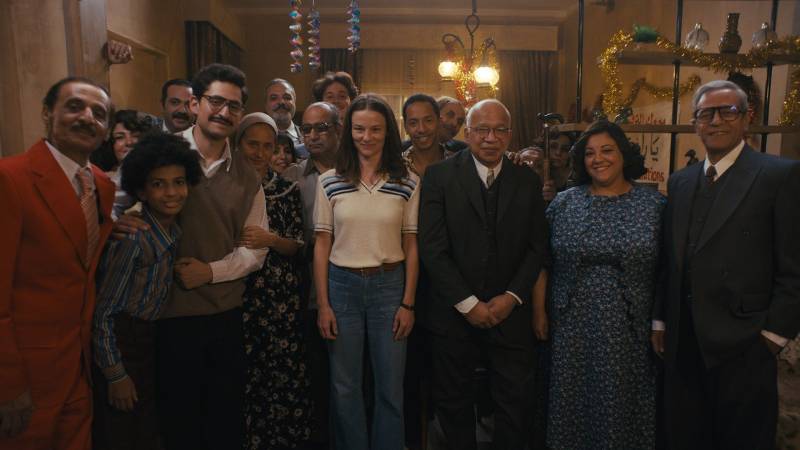
Abu Bakr Shawky is pictured at the top of this interview (snapped by this humble journalist himself). The other image is a still from The Stories.