






QUICK’N DIRTY: LIVE FROM TALLINN
As the Tallinn Black Nights Film Festival unfolds across Estonia between November 27th and 23rd 2025, one of its most strategic satellite programmes once again takes centre stage: the European Genre Forum (EGF). Now firmly established as Europe’s most structured development platform dedicated to fantastic cinema, the initiative continues to function as a pan-European talent accelerator, tying together Tallinn, Amsterdam and Zagreb.
For its 2025 edition, EGF arrives with a sharper thematic focus, a slate of increasingly international hybrid projects, and a participant cohort unusually prepared for real-world market challenges. Anchored in a six-month cycle of intensive labs that span script development, production, packaging, marketing, and – this year for the first time – AI literacy, the European Genre Forum has become an increasingly important bridge between genre talent and the wider industry ecosystem.
“The European Genre Forum is a six-month training cycle for up-and-coming European filmmakers working in the fantastic genre. New this year are AI workshops and an extended legal section”, says Chris Oosterom, EGF curator and director of Amsterdam’s Imagine Fantastic Film Festival. For him, the programme’s evolution reflects a strategic widening of skills that participants must master: from legal infrastructures to the implications of AI for visual development and pre-production.
…
.
A boutique model designed for deep impact
EGF’s annual cohort is intentionally small: eight projects, selected from an open call launched each year before the Berlinale. Alumni are strongly encouraged to spread the word, which has helped diversify the programme’s pipeline and create a more interconnected European talent network. As Oosterom explains, quality leads the selection process, but narrative originality and ambitious use of genre are equally vital“. A striking story with compelling characters catches us, but we also look at the use of genre for the story. In addition to that, geographic spread and a variety of genres matter as well.”
The programme’s deliberately intimate scale allows mentors to intervene across the entire development journey. This begins with the script lab in Zagreb and progresses through Amsterdam’s production and financing lab before culminating in Tallinn, where final pitches face an audience of financiers, festival decision-makers and market specialists.
For many teams, the first lab proves decisive. “It all begins with the story and script. For most of the teams, the first lab and the online follow up shape the way they go into the other labs, especially the final pitches in Tallinn,” Oosterom notes. The model – simultaneously pedagogical and market-oriented – has proven unusually effective at propelling projects to the next step in their lifecycle. In a volatile market, Oosterom insists that progress itself is the key metric: “In the current market it is already a great achievement if a project manages to move one step further into its journey; receiving development funding or realisation. Getting made is the main thing”.
A talent hub generating tangible results
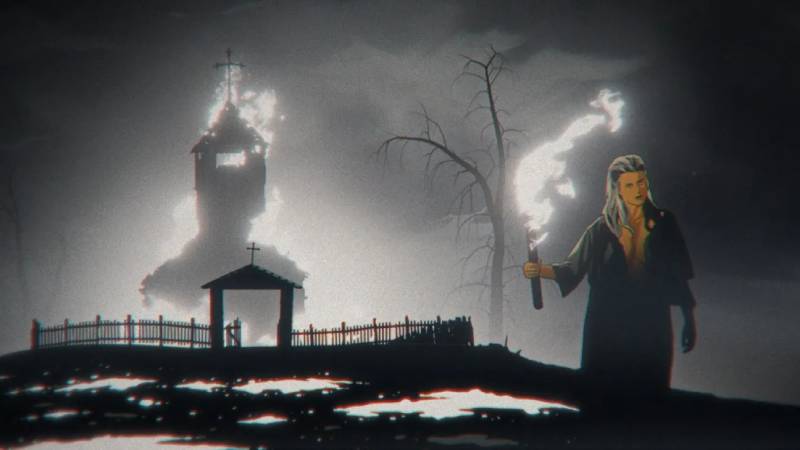
Recent EGF alumni have made notable leaps. Oosterom mentions two emblematic examples. One is the Latvian animated hybrid Dog of God (Raitis Ābele and Lauris Ābele), which participated in 2022 and is now both EFA-nominated and the Latvian Oscar entry. The second is You Are Not Me, by Spanish duo Marisa Crespo and Moisés Romera, which went on “an extensive festival run, winning awards on the way.”
Both filmmakers credit EGF with strengthening the robustness of their projects – notably through script development, networking access and early exposure to sales and distribution scenarios. For Crespo, whose film ultimately premiered at Fantastic Fest 2023 before receiving theatrical distribution in both the US and Spain, the Forum provided clarity and resilience at a delicate stage.
“EGF helped us to reflect on the script, polish it a little more, and we also learned about international sales, distribution, and so on. Our edition was mainly online due to Covid, but we still made friends with the other participants,” she says. The community aspect, she stresses, is one of the programme’s most enduring advantages: “I totally recommend it… at the very least, they will make great contacts and even friendships with like-minded people and will be able to identify the project’s weak points and improve it.”
For Raitis Ābele, co-director and producer of Dog of God, the Forum was both a creative stimulus and a strategic awakening. Entering the programme with limited knowledge of genre markets, he describes EGF as an initiation into a wider global family of curators, festival directors and fellow creators: “we entered the genre world as almost blank pages… EGF opened our eyes intellectually and practically”
The Forum’s network, he adds, directly helped the film travel the global circuit, from Tribeca to Sitges, Fantastic Fest, Imagine, FrightFest and Morbido. Moreover, Ābele credits script consultations with giving them permission to push boundaries: “Some consultants said: ‘After all the Japanese anime people have seen, there’s nothing too wild anymore – your audience is adult, so go for it.’ That gave us confidence to push boundaries.”
From this perspective, EGF’s value extends far beyond development – it helps artists understand how genre films find audiences, how they circulate, and how they can punch above their weight in the global market.
.
Selection 2025: international, hybrid, ambitious
This year’s project line-up again underscores the internationalisation of European genre cinema. The slate leans toward hybrid storytelling – blending horror, fantasy, thriller and sci-fi with firmly character-driven dramatic arcs.
One such project is AR Lives, a Germany/Taiwan collaboration exploring augmented reality, identity collapse and techno-spiritual anxieties – a reflection of EGF’s increasing draw beyond purely European teams. Another is Burial Patrol, an Italian dystopian sci-fi debut set in a sun-scorched, post-collapse Mediterranean world. Producer Mattia Puleo describes the Italian project as a tale about “revenge, justice and the fight for freedom”, conceived in a “retro-future” setting where collapsed infrastructures and a pandemic of reanimated dead have created a fragile, authoritarian society. In detail, the story follows a Burial Patrol officer whose world unravels after mistakenly killing a living man.
For Puleo, the Croatian and Amsterdam labs were transformative: in Zagreb, industry mentors confirmed the value and the merits of the film and the screenplay, offering insights that strengthened its inner logic, while Amsterdam refined their financing strategy and sharpened their international ambitions. He calls Tallinn the project’s first real debut in front of industry professionals, and expects the momentum generated here to sustain a full fundraising year in 2026.
The team is now actively seeking Swiss or UK co-producers, as well as an early dialogue with reputable sales agents capable of handling English-language elevated genre. Another 2025 selection, BLOOD – The Devil in Helsinki, emerges from Finland as a contemporary vampire thriller refracted through emotional intimacy and gothic minimalism. Helmed by Mika Pajunen, the picture follows Rose De Ville, a centuries-old vampire artist who turns a young mother, Mina, in order to save her—sparking a violent struggle to reclaim Mina’s stolen child.
Though steeped in genre iconography, Pajunen is clear that BLOOD operates on deeper psychological registers: “At its core, BLOOD is not about survival or seduction, but about motherhood, loss, and the search for meaning in an eternal life”. Visually, the project blends desaturated Scandinavian minimalism with modern gothic stylisation, balancing “a darkly romantic tragedy” with the kinetic aggression of films like Kill Bill (Quentin Tarantino, 2003) or Suspiria (Dario Argento, 1977).
The script is in its final refinement stage, with financing and international casting underway. Given its thematic sophistication, Pajunen sees EGF as critical for fine-tuning its global positioning and building connections across Europe and North America. Participation offers “meaningful connections, professional feedback, and increased visibility” ahead of packaging.
.
Skills for a shifting market: sales literacy and audience insight
The three-lab structure of EGF reflects the complexities of making genre films in Europe today. Covered subjects include market readiness and packaging; international distribution models; streamer appetites vs. festival pathways; audience design and genre branding; legal frameworks; AI-driven workflows, and ethical implications.
Oosterom notes a surge in demand for AI-related training: “the topic that producers are asking about most is AI… For us it would be an extra day of the Amsterdam lab, with more than one topic”. This addition acknowledges a future where pre-visualisation, concept art and iterative design workflows increasingly rely on AI as a complementary tool rather than a shortcut.
Participants also point to the Forum’s emphasis on case studies – from financing breakdowns to marketing strategies. Alumni regularly return in order to share experience, creating a reinforcing ecosystem. “We always invite them back for a case study and sometimes more. We also organise drinks in Berlin and have WhatsApp groups sharing information and connecting participants from various years.”
.
Towards a more connected ecosystem
With its 2025 edition, the European Genre Forum further cements the importance of sustained talent development at a continental level. In a market where stand-alone initiatives often provide only brief exposure, EGF’s six-month mentorship approach offers continuity—supporting filmmakers across the creative, production and distribution chain.
The projects showcased this year testify to a genre sector in transition: more international, more hybrid, more collaborative, and more attuned to audience expectations across borders. For many alumni, EGF is not simply a lab – it is an initiation into a broader professional community. As Ābele puts it: “on the genre world – once you’re in, you’re in. You become part of the community of people trying to break into the unknown… It can get crazy – but facing your shadow always leads to a brighter future.”
And for an industry constantly searching for new voices, bold visions and viable market propositions, that sense of shared direction may be EGF’s most enduring achievement.
…
.
Pictured on this article, from the top: You Are Not Me and Dog of God.
Find out more about the European Genre Forum by clicking here.