







Just Film at the Tallinn Black Nights Film Festival will take place this November in the capital of Estonia and Tartu, the country’s second largest city. As the Festival’s largest sub-festival, it focuses on children’s and youth films. The Just Film Industry Days programme for film professionals and film educators takes place for three days, between November 19th and 21st. It is followed by a workshop day for young filmmakers on November 22nd. You can find out more by clicking here.
The sub-festival has established itself as a juggernaut in this field, and it’s now in its 25th edition. In 2024, the event counted 17.000 visitors from all over Estonia, and it featured 168 screenings in Tallinn and Tartu, including five world premieres and six international premieres. The different sections included several youth and children’s film competitions and additionally, the toddler film programme, the documentary programme Doc@Just, and the first-ever Just Anime programme. There were school and family visitations, and on the Industry side, a pitching session at the Co-Production Market for the Eurimages Co-Production Development Award and the Works In Progress section.
Last year, we learnt from talks with Communication Manager Martina Tramberg and the Head of Just Film Industry Days programme Kärt Väinola that the industry must monitor and adapt to the fast-changing consumer habits of young people. We discussed how to keep children’s attention, how to challenge them intellectually, and on which platforms to meet them. Click here in order to read our article on Just Film in 2024, published one year ago.
Just Film Industry Days further joined forces with Baltic Film and Media School in order to explore the patterns and preferences of next-generation viewership from a marketing and distribution angle, and it witnessed the launch of a children’s and youth film category in the Baltic Event’s Co-Production Market. Youngsters had the chance to submit their work, possibly securing a screening during the festival. This was part of Just Film Festival’s #youngfilmmaker programme. Last year’s edition also marked the launch of a three-year partnership with KidsRegio, a lobby initiative for high-quality and multi-faceted European Children’s Films.
Susanne now talks to Väinola and new co-manager Alasdair Satchel. It becomes clear that supporting young filmmakers on their journey, as well as offering children’s films as a tool for experiencing the world, can pose challenges. But in the spirit of Just Film, overcoming these obstacles also offers opportunities to connect and share knowledge.
…
.
Susanne Gottlieb – Please share with us some of the biggest milestones of the latest edition of Just Film Industry Days.
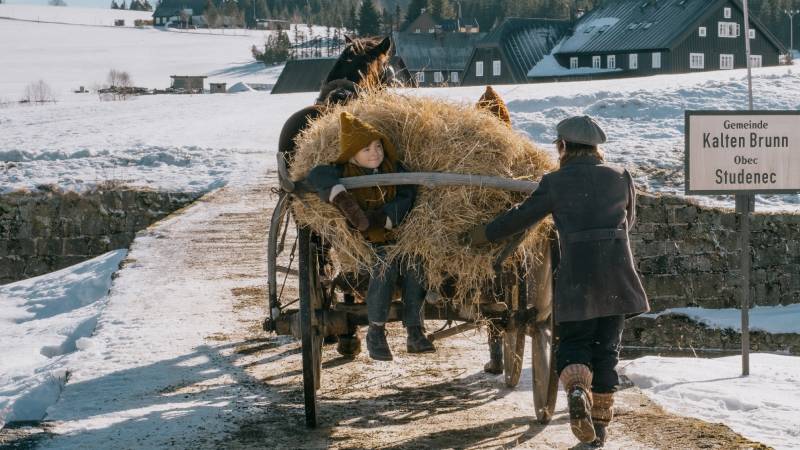
Kärt Väinola – The last edition was a success in my eyes! We grew; the panels were interesting and well-visited. The pitches were a success. Regarding the works-in-progress projects, we just asked for updates from last year’s participants, and one of our projects just premiered at Locarno, the Czech production A Secret Delivery [Ján Sebechlebský; pictured below]. They also confirmed, they have secured some festivals. Several projects from last year’s WIP will be in Just Film’s programme, which is a sweet full-circle moment for us. For both previous editions, the sales and distribution panel talks have drawn a lot of attention, so we will definitely continue talking about that.
Alasdair Satchel – The sales and distribution panels have been absolutely fascinating. It opens up an area of the film and sales that isn’t immediately obvious to a filmmaker who’s spent years working on an idea, then bringing that idea to life, and then thinking, okay, we’ve got the film, but actually, how do we fit it into the marketplace? This world is based around human connections, and those sales and distribution agents have to understand their audiences and their marketplace. What would be the right thing for each audience, but also what to take a gamble on. We were very lucky that we had the sales agent for Flow [by Gints Zilbalodis] there last year, it was just before Flow went completely massive [it won the Oscar for Best Animation Film]. You could feel the buzz even then.
SG – You have stated that you believe in “early starts”. What exactly does that mean?
KV – Early starts, in the context of young filmmakers, means giving young people the chance to explore their creativity and to build essential skills at a formative age. At the festival, we have the #youngfilmmaker programme, where we screen films from very young filmmakers. Some devoted youngsters who’ve been in Just Film’s juries are now part of the programming team, and through the Just Film Industry Days, we try to find ways to push the creativity and therefore offer workshops for students as young as 13 because filmmaking isn’t just about cameras and scripts, it’s about teamwork, communication, problem-solving, and storytelling. These skills extend far beyond the film set and are valuable in any career. Starting early also helps students see the world differently, teaching them how stories are constructed and how media shapes perspectives. This kind of critical thinking is vital in today’s content-driven world. While some may go on to make films, all of them need a toolkit for life, confidence, creativity, and the ability to work with others. It’s about helping young people grow into thoughtful, capable individuals.
SG – What are the biggest advantages and challenges in hosting an industry programme aimed at children and young people?
KV – One of the biggest advantages of hosting an industry programme for children and young people is the incredibly supportive community around youth and children’s films. It’s a space where you can be part of changing someone’s world through storytelling and creativity. There’s also the opportunity to contribute to a larger movement, helping to produce and promote more high-quality films for young audiences, which is something the industry needs. However, one of the main challenges is financing. Organising an international event that focuses on youth and children often comes with complex funding hurdles, as this area doesn’t always attract the same level of investment as other sectors. Despite this, the impact these programs can have on young people’s lives makes the effort worthwhile.
SG – Something we talked about last year was that you have this perfect size for a festival and flat hierarchies where people get together. But you keep growing. Can you feel a difference?
KV – Often, the industry people attend either this market or that market. The children’s and youth film people usually attend the markets that are designed for them. What we’ve been discussing is that Tallinn, in a way, offers a unique opportunity to attend many markets at the same time. We are a bridge from one industry branch to another – e.g., you can visit as an Industry@Tallinn & Baltic Event guest, but jump in and listen to a panel about children’s films, or visit the Just Film Works in Progress pitch, it’s open to all guests
SG – On your website, you mentioned, amongst others, you’re definitely going to do Fck up Night again, where people can share failures and learned lessons.
KV – Yes! We’re doing it again! The opening event was fun, but still professional. We had just the right number of people, and the stories shared were a great mix of personal and work-related blunders. For this edition, we’re tweaking the format a bit and hoping to encourage more people to share their experiences.
At the end of the day, we’re all human. We all stumble and make a mess of things sometimes. What I love about this format is that whether you’re a CEO of a thriving company or a producer just starting, everyone can share their stories and mistakes. It’s a reminder that no one is immune to failure.
This year, I’d love to see more high-profile guests step up and share their own “oops” moments. It’s powerful for people to see that even the most successful have failed, and that those failures don’t have to define us.
AS – I think that our festival offers that level of intimacy. It’s at a human scale. You can go to a night like Fck up Night, and you can hear someone talking about a professional mistake that is human, and then once they come off stage, you can have a beer with them. It doesn’t lower anyone’s level. It raises everyone to the same level. I think for me, that’s one of the greatest, most appealing things about our festival.
SG – Alasdair, you recently joined the team. You have a background as a filmmaker, theatre director, and podcaster. Now you’re joining as a co-manager. You have worked with kids before, you’ve done workshops, you’ve given animation classes, and lessons about broadcasting. What perspective or angle are you bringing to the Event?
Alasdair Satchel: I think one of the things that I’m interested in looking at is particularly our kind of panel events and how we can bring in people from agencies from across Europe. How to improve and increase young people’s access to film in a way that allows them to enjoy film. In a way that enables them to fit into the workplace, and into an economic picture of the country. We have an education charity, Into Film, in the UK, and we’re also talking to the Eye Filmmuseum in the Netherlands.
We’re trying to find a mixture of different countries that we can talk to that are operating at different scales for Estonian teachers, education personnel, and decision makers. We want to look at what these countries are doing in terms of their film work to enrich and improve the economic rigour and strength of the country through education, through employment, etc.
We’ve also got filmmakers involved in the Film Education Network, launched in Estonia. We’re hopeful that people will talk afterwards and maybe have some lunch together and say, “I want to try and do this”.
SG – What kind of film education are you pushing for?
AS – I think that education should never be passive, and a student should never just be letting something just wash over them. They should be actively engaging. What we’re looking to do is to find ways to promote active engagement with film. Not everyone will be a filmmaker. But if they have the understanding of, someone was able to do this through film, maybe they can do that through breakdancing, parkour, or carpentry. At its core, film is about voice and making voices heard. Film is the most equitable of all art forms. Not every family home has books. Not everyone can read. Not everyone can afford to go to the theatre, to the opera, or to a classical music concert. But from when we were the smallest children, we were put in front of a television, while our parents or guardians went off to do something else for five minutes. Young people have a high level of film interpretation. There’s a common language, which is the moving image.
SG – Just Film now has an animation section, called Anime. Is this something close to your heart?
AS – One key learning is that Flow was created on free software Blender, and that is a game-changer. So many young people you meet nowadays are very able with computers, tablets, and mobile phones. Even in schools in Scotland, they are teaching animation techniques through Blender. I think that level of accessibility is important. Animation is the illusion of life. It’s generally 12 frames a second, which is very manageable for young people to create.
KV – From the festival side, we’ve always appreciated animation. The animated films selected by our programming team cater to audiences from toddlers to young viewers. For our 25th edition, we are happy to continue the Anime programme, which debuted last year with a promising start. Like any new initiative, it takes time to find its audience, but the reception last year was very promising.
SG – KidsRegio just published the report Building Bridges, which interviewed 374 children from 12 countries, ages 7 to 11. The outcome shows that they see film as a social activity, the glue between family and friends. One point that stood out is that kids outgrow the content that is meant for them rather quickly. They consider it too childish, and they want to go for older content. Are filmmakers racing a clock, or is this a question of quality?
KV – Very good question! I think there will always be filmmakers who make films for kids, but they do it in a way that they feel is right. Some filmmakers make films for kids, but they also listen to what the kids have to say. Some filmmakers may underestimate them. Others make bold choices. As a festival, our picks have always been rather on the bold side. Last year, our school class jury selected Kneecap [Rich Peppiat] as their favourite film. We’ve had filmmakers come in for the Q&A, and they’re like, “I’m sorry, but I just saw super young kids went to see our film.” What we realised is that the target group that they feel is appropriate is based on their culture. But it might be different somewhere else.
Some 8-year-olds are still into Peppa Pig, while others are secretly watching Squid Games, which definitely is not meant for them. I believe festivals have a big role to play here. To offer a variety of content and make bold choices. But to also make sure to show films that are suitable for the youngest of audiences, that at the same time don’t underestimate them.
SG – Movies grow with you. When you’re 10 years old, you identify with one character. When you’re 35, you identify with someone else completely different
AS – Film historian David Thompson has a very good perspective on this. Within our first 12 or 15 years of watching films, we don’t watch them critically, but instead through a critical eye. We’re still building our knowledge of what film is and the vocabulary of film.
SG – The Festival introduced a new AI tool last year. Is that something you’re looking into incorporating as well?
KV – We’ve been covering AI topics during both of our previous Just Film Industry Days editions. A few lectures about the basics of AI language models, but also workshops that introduced practical tools for creatives. Last year, the Festival introduced an AI tool called Susi that can be used throughout the festival’s websites. Essentially, you can type in the chat that you love Titanic [James Cameron, 1997], but you also love RoboCop [Paul Verhoeven, 1987]. Susi will suggest films from the festival programme based on these criteria. Something to also mention is that last year, Industry@Tallinn & Baltic Event introduced the AI Atelier, which was a series of lectures for selected participants. So, yes, AI topics have notably been part of the programme.
AS – I went to one that was exceptional, because it opened up to me how to use AI for scheduling management, project management and how as an artist you can improve your workflow.
SG – What are some of the highlights you’re looking forward to this year?
AS – We’ve been spending our time over the last couple of days coming up with selections for our co-production market. There is a pitching event where projects will present themselves, looking for partners. One of the things we’ll be doing is working with them to allow them to make their pitch the best they possibly can.
I’m also looking forward to the session we’re going to do with Into Film and the Eye Filmmuseum about film education agencies and what they can do in their respective countries in order to help raise attainment.
KV – I look forward to the panels that Alasdair is moderating. The sales and promotion topics are always interesting. This year, we’re talking about journalism and media behind children’s films. We’re raising the question of why children’s films deserve a spot in the big leagues as well, and why they should be discussed more. We’re also discussing why films are getting less and less cinema time, which has lately averaged to around one month. It’s a universal topic that probably intrigues many. We, during this panel, are focusing on the children’s and youth films perspective.
Which raises several questions in regards to the children and youth films. If these films start relying heavily on algorithms, will it drain the creativity out of the process and reduce everything to a formula? What does that mean for filmmakers? For creativity? And for the issues we’ve discussed before, like underestimating audiences or creating relevant content?
I do appreciate streaming platforms. They open up access for people who can’t always make it to the cinema, and that’s a great thing. But if this shift starts fundamentally changing how films are made and the kind of content we’re offering to children, I don’t think that’s the right direction. It’s a conversation we need to have.
SG – Anything else you’re looking forward to?
KV – I’m so happy Alasdair is with us. I feel it’s been in the making for a bit. Alasdair and I met in a jury at the Lucas Film Festival in Germany a bunch of years ago. We clicked immediately. He’s a great addition to the team.
AS – I’m delighted to be a part of the team as well. I love this way of understanding the native marketplace and filmmaking, as well as the international connection. It’s such a welcoming and fun festival. There’s intimacy, you get to know people quickly. It’s just impeccable!
SG – Do you have any advice for those submitting projects to Just Film Works in Progress?
KV – Not that much advice, but rather just encouragement to submit your project! If not for this market, find a market that works best for your projects. Be persistent, precise, thorough, make sure you know your project, and remember that deadlines are there for a reason.
…
.
The image at the top of this article is from last year’s WIP Twinkle Twinkle Little Elephant (Meikeminne Clinckspoor).
Find out more about Just Film Industry Days by clicking here.
