QUICK’N DIRTY: LIVE FROM VENICE
Eighty-two-year old Werner Herzog has devoted the past three decades of his life almost entirely to making documentaries. Grizzly Man (2005) is perhaps the most easily recognisable title from this long period of the German director’s career, who has lived in the United States since 1995. The morbid nature documentary chronicles the life and death of conservationist Timothy Treadwell, who was eventually eaten by the bears which he adored. Given the film title and Herzog’s taste for the macabre, one would hazard a guess the Ghost Elephants might follow a similar path. There are indeed similarities, such as the sombre tone, and Herzog’s inimitable voiceover, with his hoarse speech and strong German accent. But there is one remarkable difference: in Ghost Elephants, it is the film itself and not the character that’s doomed to fail.
American ornithologist, conservationist and National Geographic explorer Steve Boyes is obsessed with a giant elephant, which inhabits the equally large Smithsonian National Museum of Natural History, located in Washington DC. The creature was hunted down and killed in an Angolan plateau during the 1950s, and Boyes has devoted much of his life and career to tracing the descendants of the beast. Various characters and Herzog himself repeatedly assert that this individual is the largest animal to have walked the Earth (a slightly exaggerated claim if you take into account dinosaurs or the recently extinct mammoths).
Herzog and Boyes travel to Namibia in order to meet the San bushmen, a people that communicate mostly through vocal clicks. The German director never appears in front of the camera, but it is his narration that shapes the story. Boyes and a bushman called Xui travel to neighbouring Angola in the hope of reaching the remote highlands possibly inhabited by Henry’s great-grandchildren. They ask for permission from the Nkangala King in order to enter the forest: the flamboyant monarch believes that people descend directly from these pachyderms. A bizarre blend of royal protocol and religious ceremony ensues before the men are given the green light.
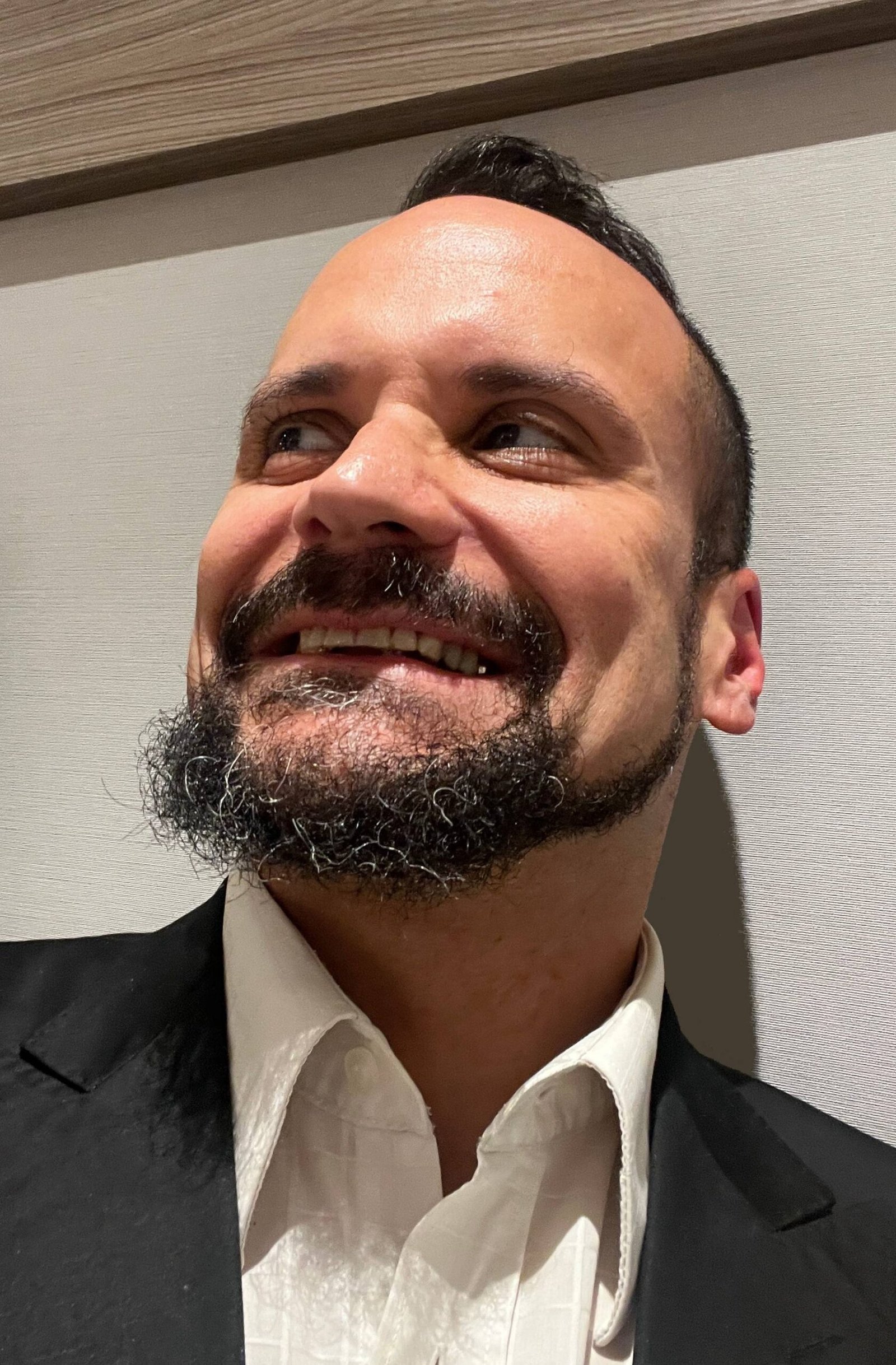
Herzog is strangely absent from the rest of the journey, narrated in the third person of the plural. He presumably directed most of the film remotely, making the endeavour more Ghost Director than Ghost Elephants. Such practice might raise some eyebrows amongst hands-on conservationists such as 99-year-old David Attenborough. Herzog’s dark sense of humour and self-deprecation is present throughout. He claims that dead birds look like mommies. He mocks the idea of exoticising the African subjects, claiming that he couldn’t stop himself from doing it because “they were surrounded by chickens”. In all fairness, it isn’t just the Africans that are exoticised. Dishevelled and heavily bearded Boyes comes across as a very peculiar species, his gaze empty and lost, often staring into the nowhere. His search seems as futile as Treadwell’s. The occasional buzzing of flies (a harbinger of death?) suggests that his fate too might not be a rosy one. Boyes recognises that he’s a dreamer, and that the outcome of the search is irrelevant. He’s happy either way: with or without encountering the elusive beasts.
The biggest problem of Ghost Elephants is that Henry the giant elephant is not particularly awe-inspiring, and the search for his descendants is monotonous. The human characters are far more interesting than the largest mammals on earth. The reason why Herzog and Boyes travelled to Namibia in order to gather people to assist them in their journey across Angola (instead of just using Angolans) is never clear. And the whole film is barely enlightening: the revelation that genome sequencing is highly complex and accurate is hardly a new one. The ending is particularly disappointing. Overall, this is a misfire in the career of a director with a mostly impressive filmography
National Geographic production Ghost Elephants premiered in the 82nd Venice International Film Festival, where Werner Herzog received a Lifetime Achievement Award. The prize was presented by Francis Ford Coppola.